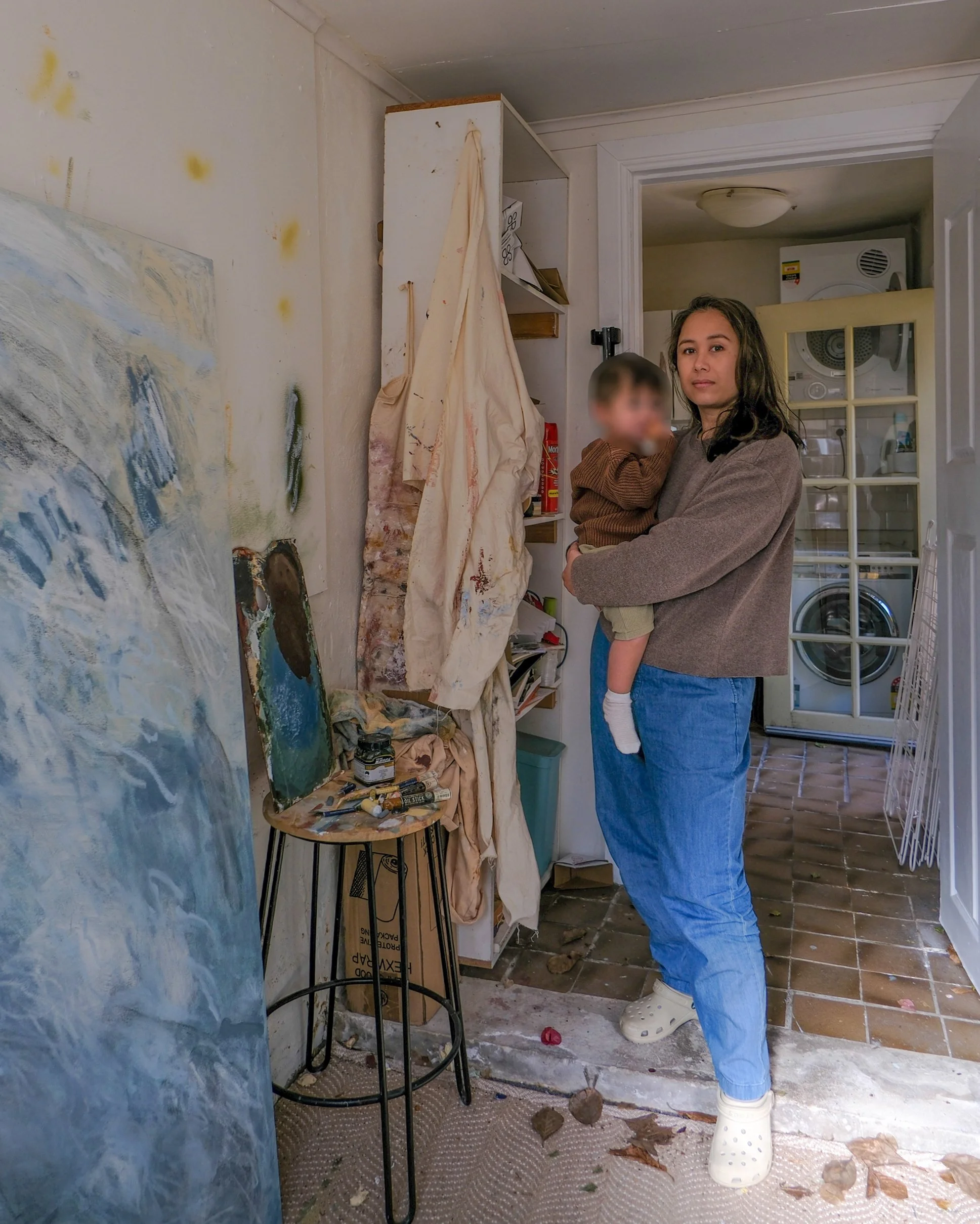
Stories Of Kin: Dalin Alejandrino’s Cambodian Roots
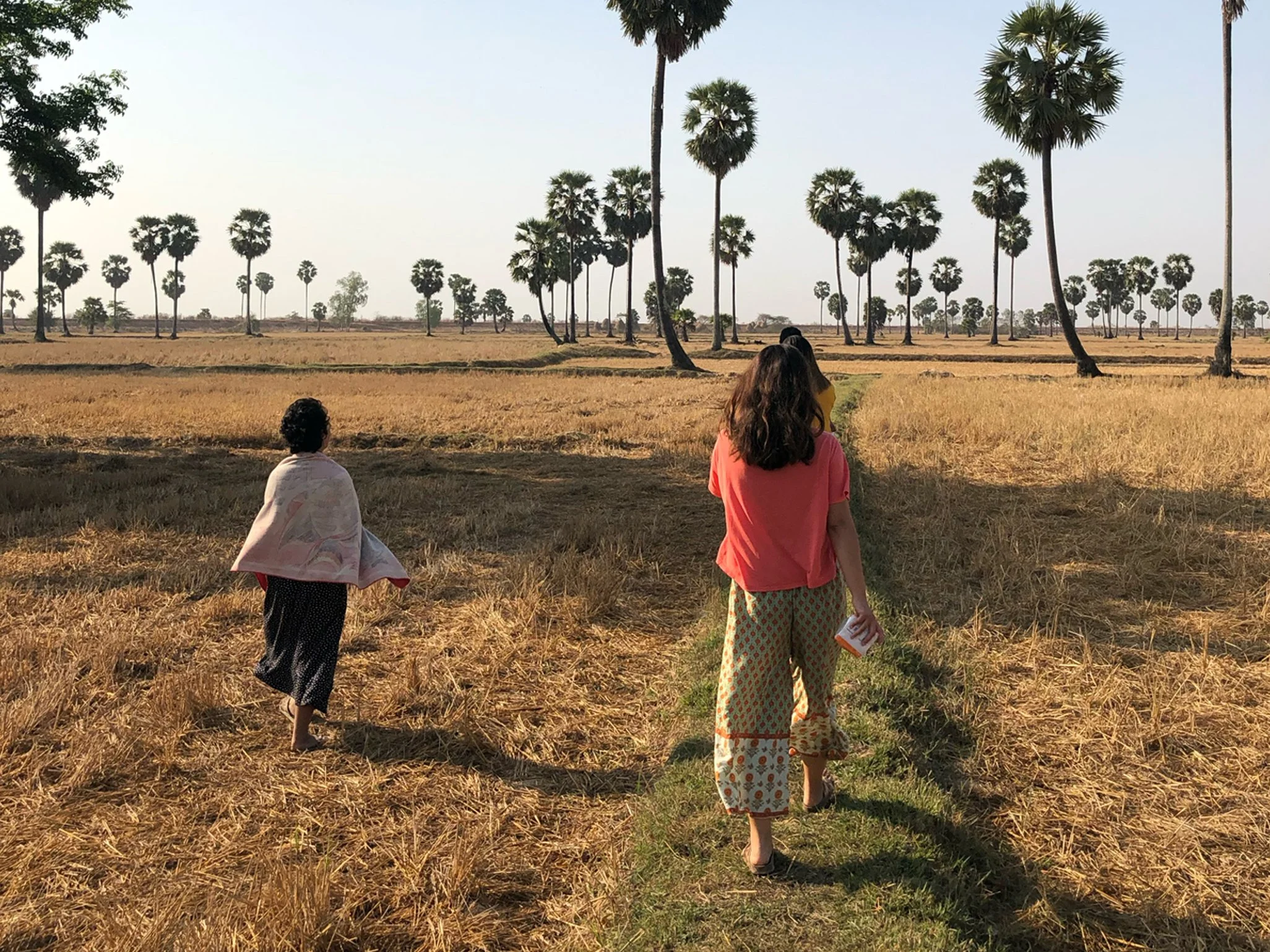
Across the land in Kampong Cham province, Dalin walks alongside her family
In this Stories Of Kin piece, artist Dalin Alejandrino traces a life shaped by her family’s crossing – from her birth in a refugee camp on the Thai–Cambodian border to building a life in Australia. Years on, she reflects on identity, belonging and a creative practice rooted in reclamation.
Dalin was born in Khao I Dang, a refugee camp in Thailand near the Cambodian border – a place held together by urgency, care and fragile systems built for those with nowhere else to go. Like many Khmer people, her parents fled during the 1975 civil war, when the Khmer Rouge seized Phnom Penh and forced entire populations out of their homes. Displaced from their own families, they made separate journeys through the jungle, eventually crossing into Thailand, where they met for the first time in the camp.
What followed in Cambodia was a deliberate dismantling of culture. Education, religion, language, art – all seen as threats. All targeted.
Amid that uncertainty, Dalin’s parents married. She and her two older brothers were born into that in-between space. While she was too young to remember those early years, the imprint remains. So does a deep gratitude for the volunteers and aid workers whose care made her family’s survival possible.
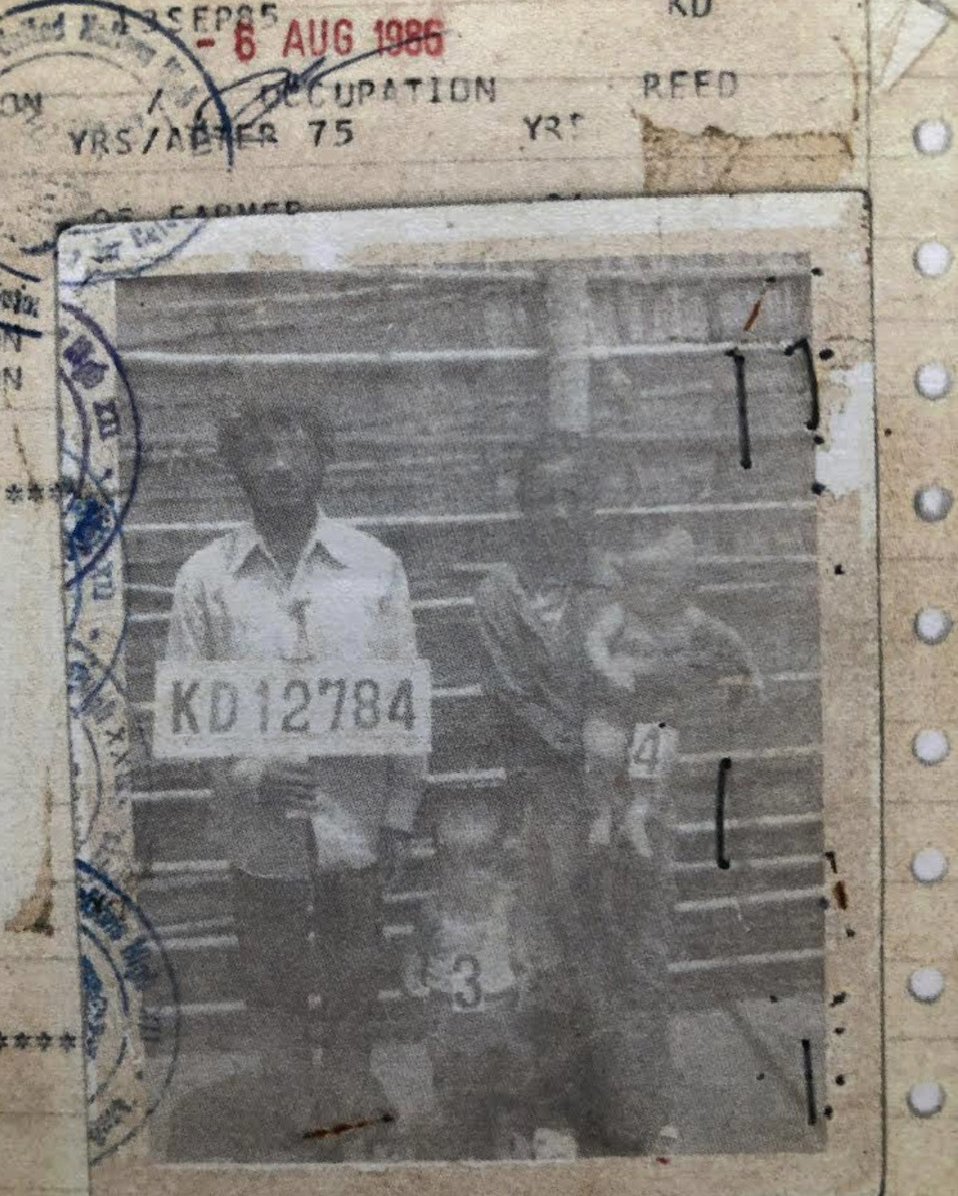
During the 1975 civil war in Cambodia, the Khmer Rouge systematically targeted educated people, monks and religious leaders, government workers and anyone perceived as connected to the outside world. Pictured here are Dalin’s parents and older brothers at a refugee camp in Thailand.
In 1987, her family was sponsored to come to Australia. Their first months were spent in Villawood Detention Centre, waiting. Then, Cabramatta in South Western Sydney, in a small unit shared with three other families. Her parents didn’t speak English, but they found community among other Cambodians, where familiar language and shared hopes helped form a sense of belonging.
Her father worked as a labourer. Her mother was a seamstress, spending long days in an industrial warehouse earning just $2 an hour. After her father passed away while Dalin was still young, her mother returned to agriculture – the work she knew, and the work that could carry them forward. Long hours and early mornings meant the community stepped in to help raise the children.
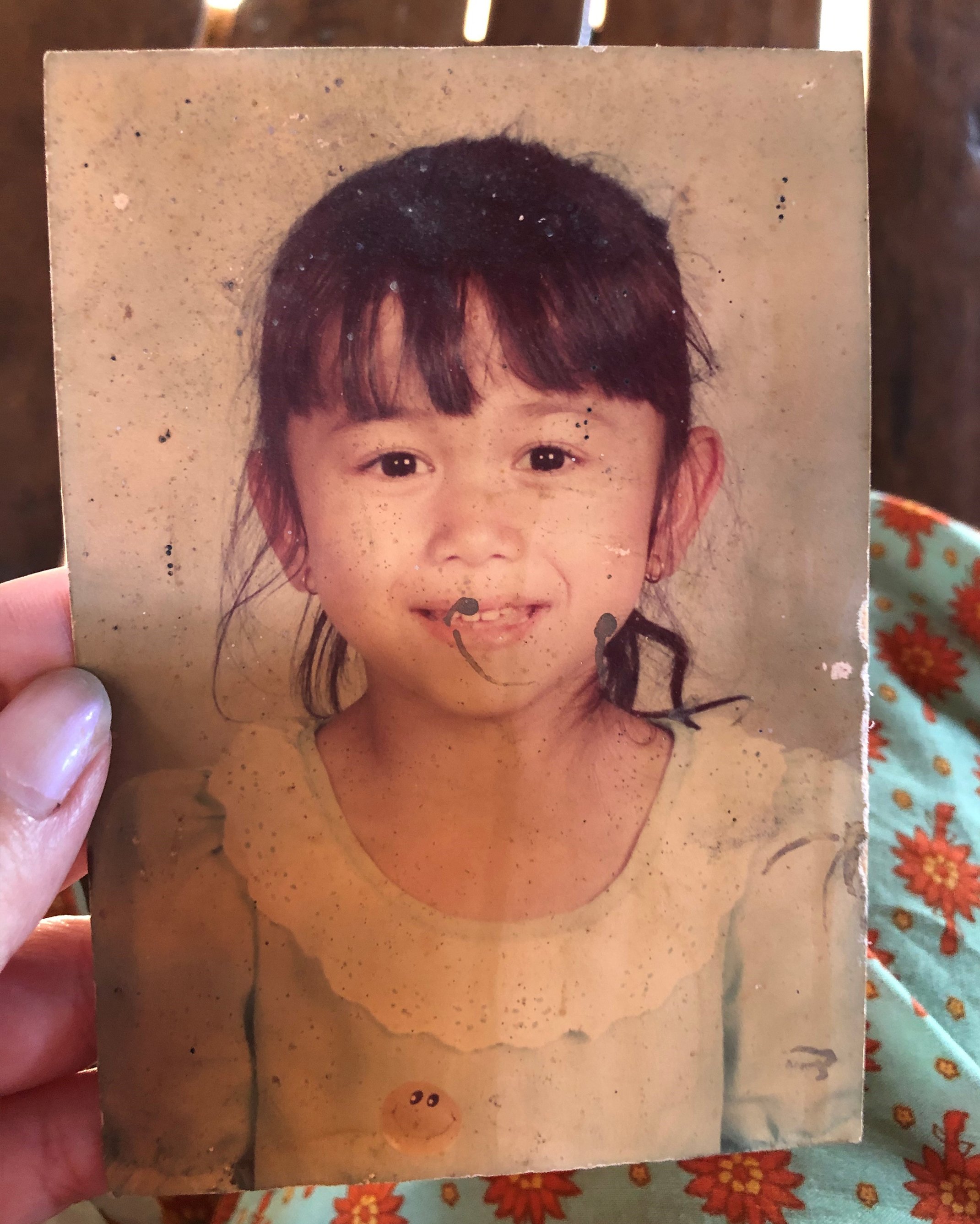
Dalin in kindergarten. Years on, she has volunteered with Sydney-based not-for-profit AusCam Freedom Project, supporting young Khmer girls to build resilience and gain the skills needed to shape their own future.
While there was hardship, there were also fond memories that have stayed. Morning walks to the local bread shop with a few coins in hand and the smell of fresh rolls drifting onto the street. Cheese and bacon, still warm, were Dalin’s favourite. A $2 coin stretched far, enough for a bag of ten bread rolls to take home, perfect when torn apart and dipped into her mum’s chicken and potato red curry.
Outside, the street became an extension of home. Dalin ran around with other Khmer children, skipping rope made from elastics (rubber bands), flicking cards against the wall, and playing hide-and-seek. Nearby, the adults gathered by the housing unit mailbox, having a yarn.
To this day, Dalin finds herself asking, “How lucky am I to live in Australia?" The freedoms she speaks of are simple but profound – education, clean water, healthcare, the ability to work, to build a life, to move freely through the world.
But that gratitude sits alongside something else. A quiet awareness of what has been left behind. She thinks of her family in Cambodia. Of her female cousins. Of young girls whose lives are shaped by expectations that limit their access to education and opportunity. The contrast is sharp. It lingers.
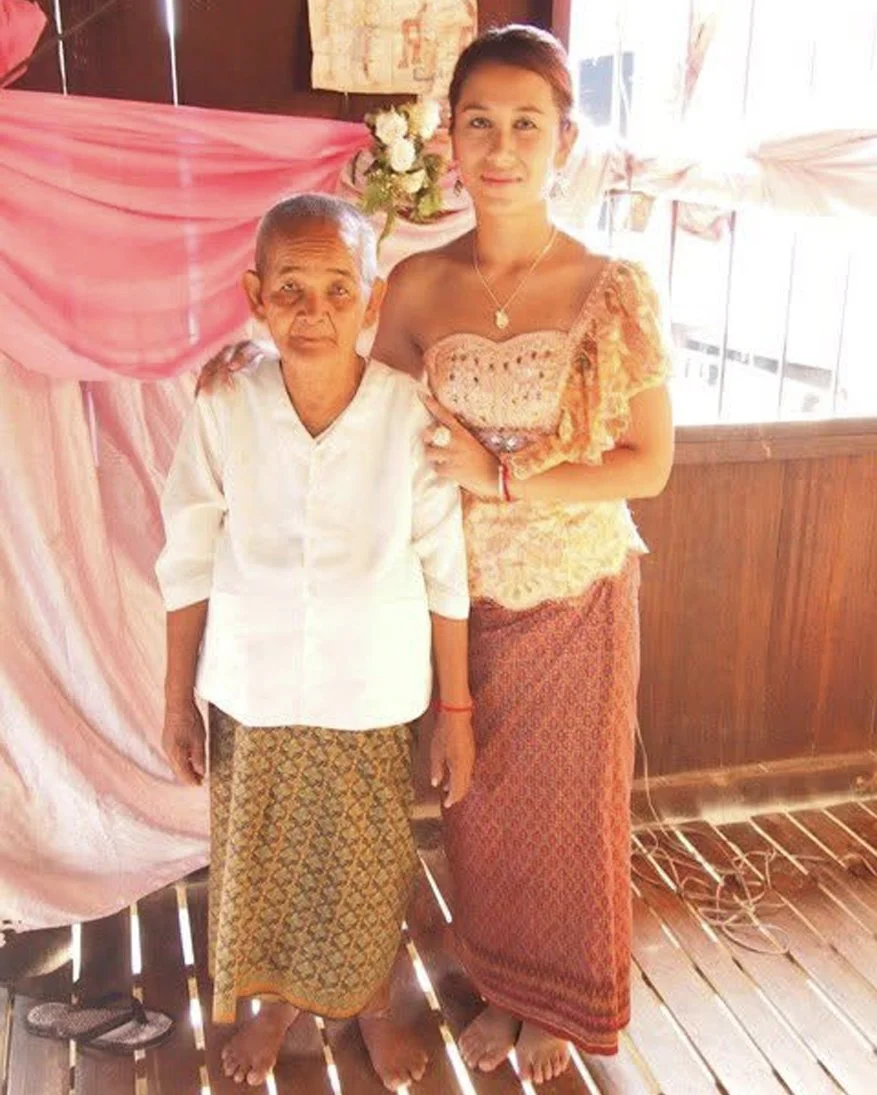
On the day of her cousin’s wedding in Kampong Cham province, 2012, Dalin stands with her late grandmother. A moment of closeness during her first visits back.
In adulthood, Dalin has travelled to Cambodia three times – in 2011, 2012 and again in 2020 – each visit drawing her back to Kampong Cham province, where her late father’s family still live and work on the land.
Life there moves to a different rhythm. At sunrise, young men lead cattle out to graze and plough the rice fields, or attend monk school. Elders gather at the local temple or visit neighbours, talking for hours. Women move between home and market, caring for children and preparing meals to be shared together.
Her return was, in many ways, a search. A need to reconnect with the part of her story that had remained out of reach for so long. Her father’s family had not known he was alive in Australia until a letter was sent. They learned of his passing from afar. So when Dalin arrived years later, it was a reunion layered with grief, curiosity and something deeper. A homecoming she wasn’t emotionally prepared for.
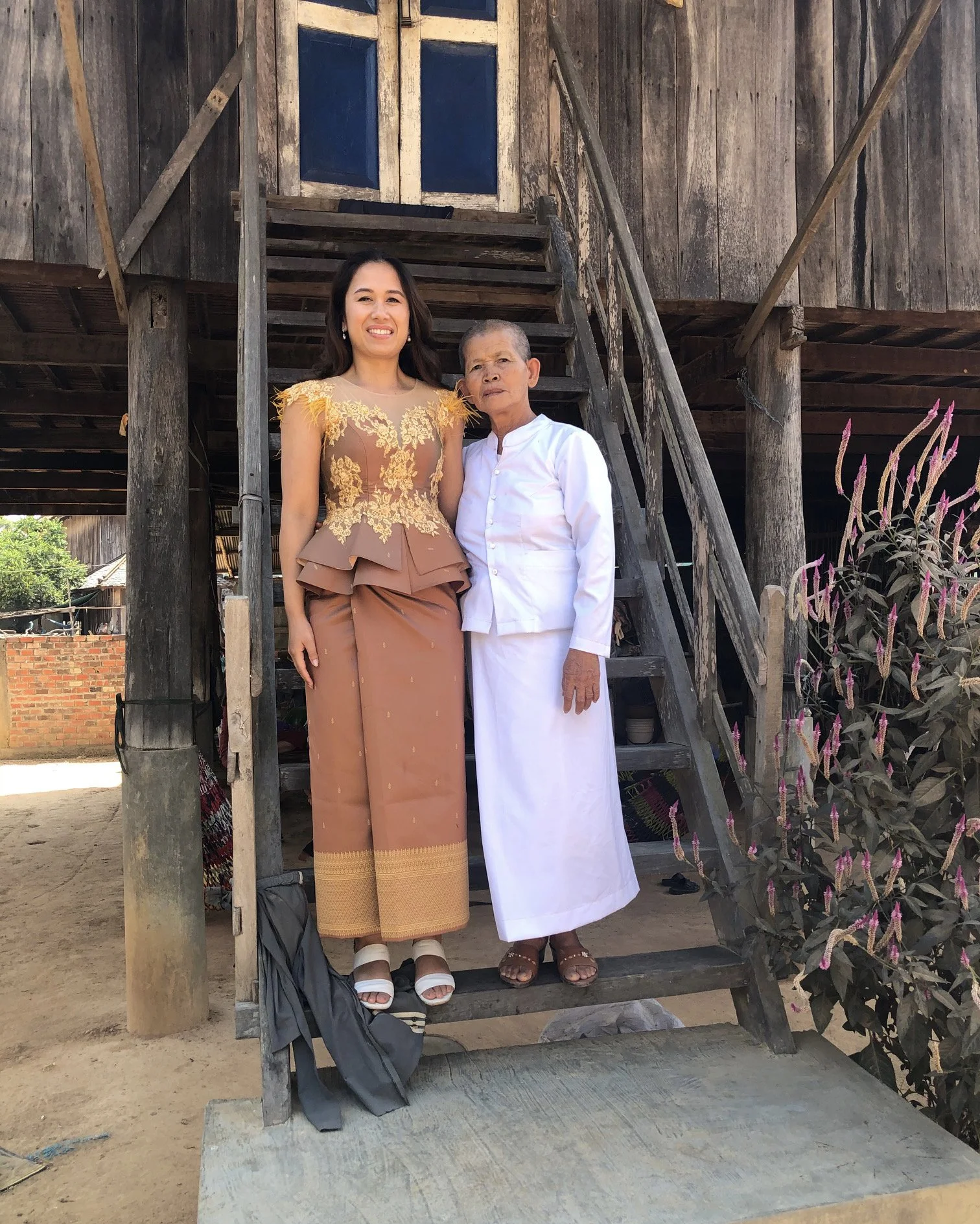
Returning in 2020 for another cousin’s wedding, Dalin is pictured here with her late aunty. By then, the family home, once without a bathroom, had been updated with one she helped fund.
Meeting her grandmother, great uncle, aunties and cousins for the first time, she felt an immediate sense of closeness. A familiarity that didn’t need to be explained. Walking across the soil behind her grandmother’s home, through the rice fields her father once knew, something settled within her. The feeling was not one of certainty, but of recognition.
There were moments that have stayed with her in a quiet, enduring way. Sitting beneath the house as meals were prepared together. Talking late into the night. Sleeping side by side in a single room, her aunty’s hand held tightly in hers, reluctant to let go.
These were not grand gestures, but small, intimate acts of care – the kind that build a sense of belonging without needing to name it.
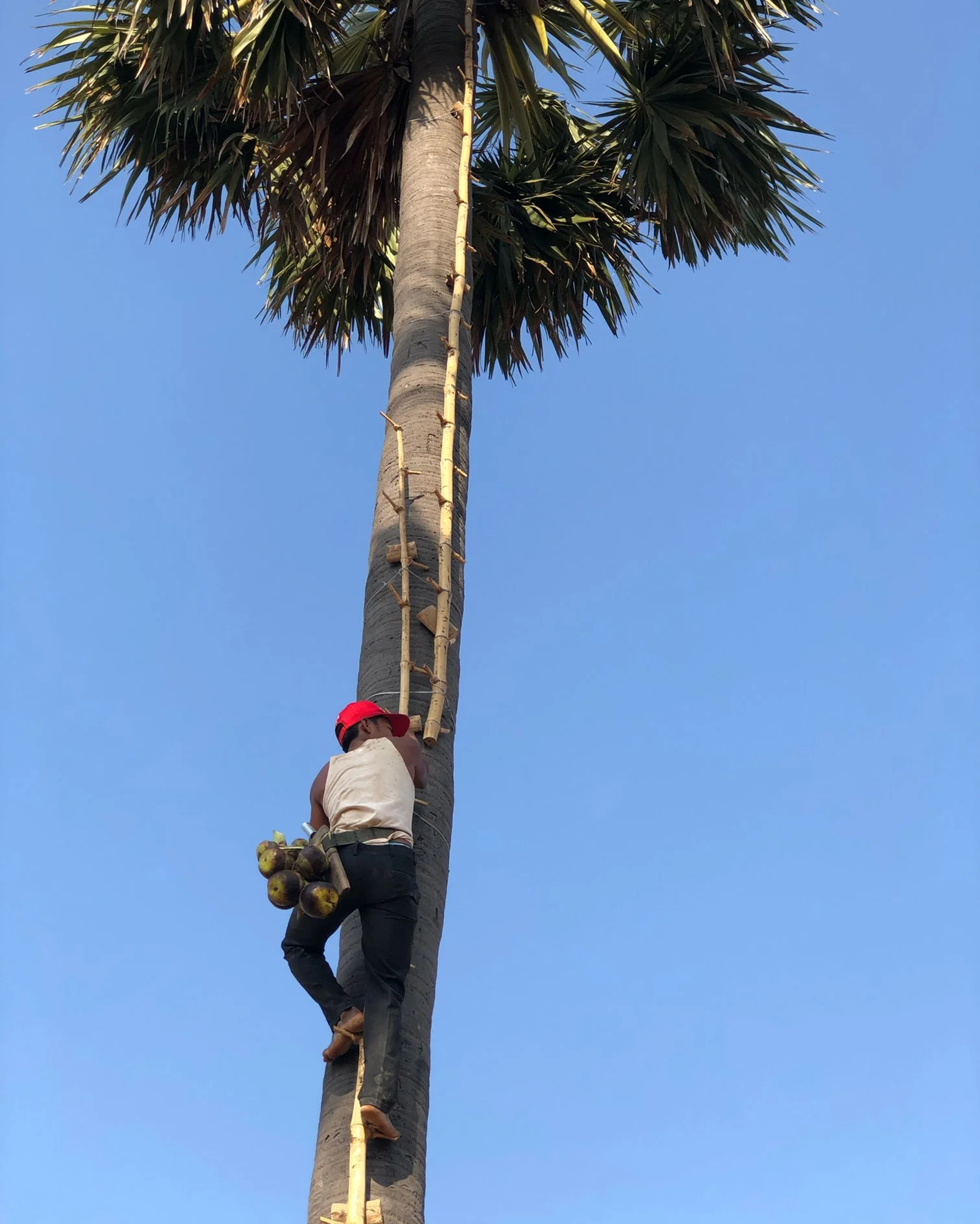
High in the palm, her cousin’s husband climbs to harvest sugar palm, known locally as thnaot. The fruit is used for cooking, while its sap is collected and slowly boiled into palm sugar – a staple woven into everyday meals and shared across the family.
At the same time, there were complexities she hadn’t anticipated. Explaining her life in Australia – the pace, the opportunities, the distance from the land – felt difficult to translate.
There were questions about what more could be done, whether bringing family to Australia might offer a different future. But Dalin came to understand that leaving is not always the answer. That to remove someone from their roots is to ask them to give up something equally significant.
One story, shared by her grandmother, continues to sit with her. A memory of the day trucks arrived, taking people to the killing fields. Her family came close to being taken, but for reasons unknown, they were spared. Not everyone was. Hearing it, Dalin felt the weight of that moment. A life that almost wasn’t. A future that could have never existed.
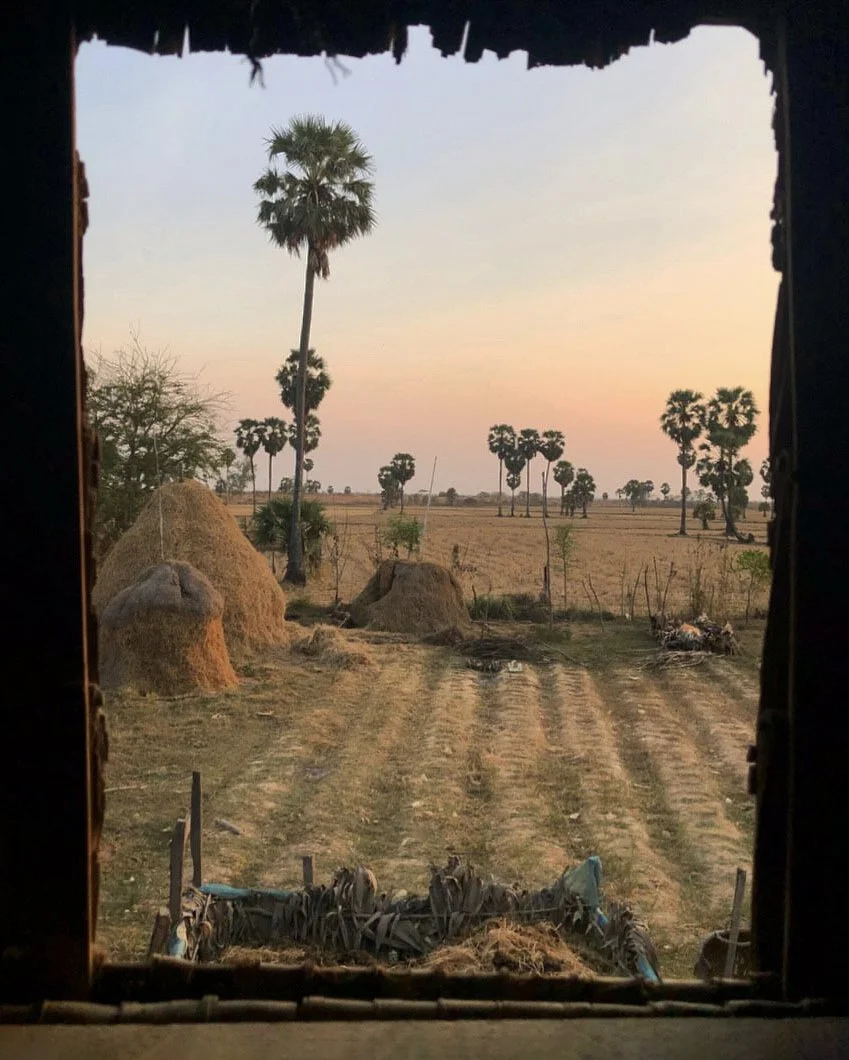
From the back of her late grandmother’s home, the landscape stretches outward – rice fields, open sky and shifting light. A view that lingers in memory, continuing to shape her creative practice long after she’s left.
It is within this weight – what has been carried, and what was nearly lost – that creativity begins to take on new meaning. As a child, after losing her father to depression, Dalin turned inward, using drawing and painting to process grief. Over time, that part of her faded into the background. Until it returned. During the stillness of COVID, in the early days of motherhood, as her daughter learned to crawl, Dalin found herself picking up a paintbrush again. Slowly. Then fully. Since then, she hasn’t stopped.
Dalin’s creativity is more than expression. It’s living proof of survival – of what her family endured, and what was almost lost. In painting freely, she continues what was once nearly erased – an act of defiance and reclamation.
She deeply believes that talent is universal, but opportunity is not – that everyone deserves the chance to feel safe, at home, and valued as a human being.
Her family’s story is one of survival, but it doesn’t end there. It is a story of continuation. Of rebuilding. Of what becomes possible when survival gives way to something more. In Dalin’s case, that continuation lives on – in colour, in memory, and in the tender act of creating.