From My Patch: Connie Cao’s Garden In Bloom
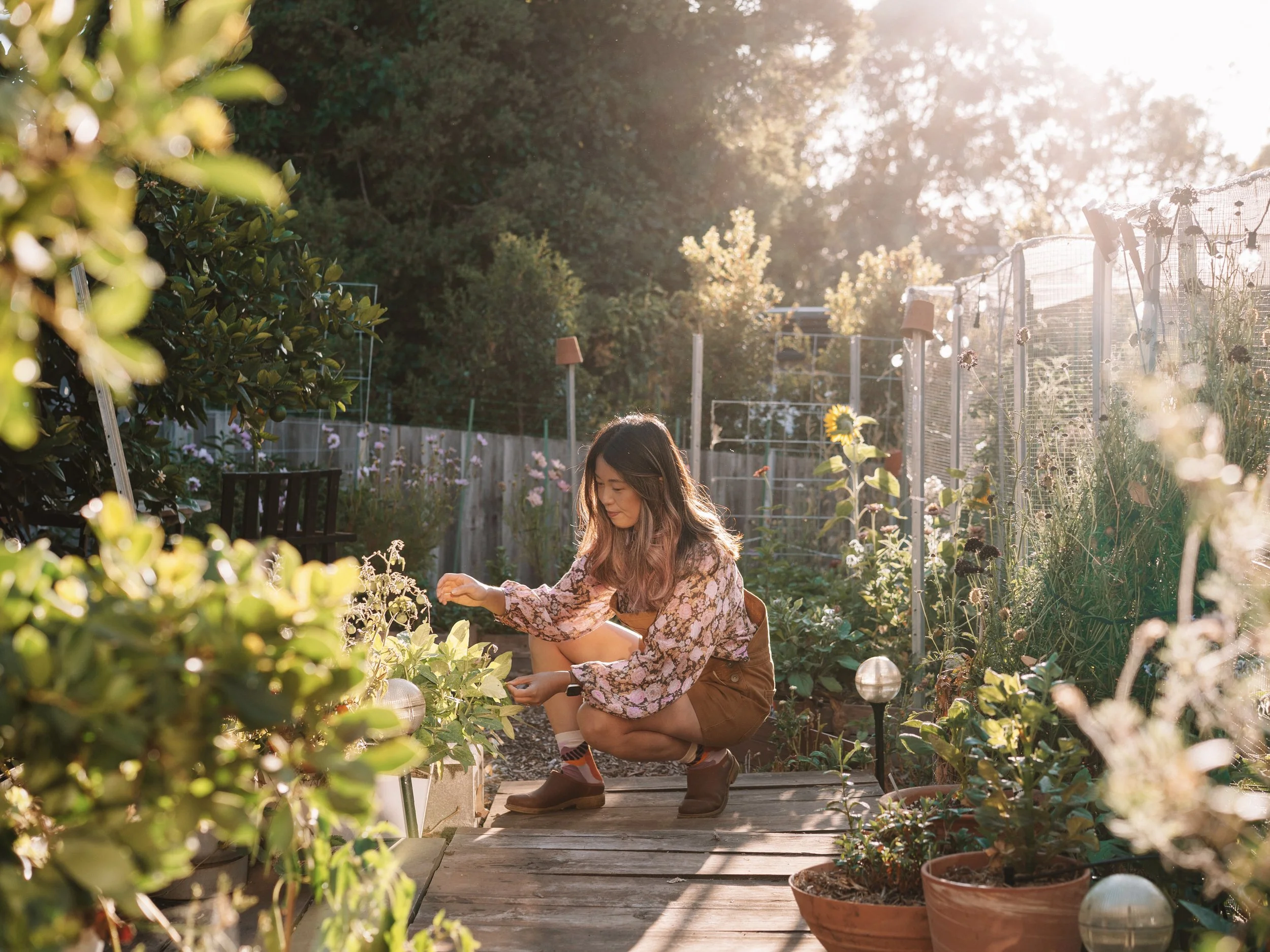
A garden tended slowly, season by season
Kicking off our From My Patch series, which spotlights how those with migration backgrounds carve out their own patch across Australia, this story introduces Connie Cao – a Melbourne-based urban permaculture gardener and author of Your Asian Veggie Patch. Her backyard reveals how culture can take root, one seed at a time.
The Australian backyard has long been an emblem of suburbia. A neat rectangle of lawn, edged with brick, anchored by a Hills Hoist standing like a flagpole at its centre. For decades, it signalled pride, order and ownership – a patch to mow, edge and maintain. For the more adventurous, there might have been a modest veggie bed tucked behind the shed, just enough room to test tomatoes, lettuce or carrots.
But for many migrants – and the children of migrants – the backyard has always held a different promise. Where some saw lawn, others saw possibility. A place where memory and culture could take root. Where seeds are passed down like heirlooms and knowledge is shared across generations. One such patch belongs to Connie Cao. Born to parents who migrated from China in 1988, Connie grew up learning how culture travels through food.
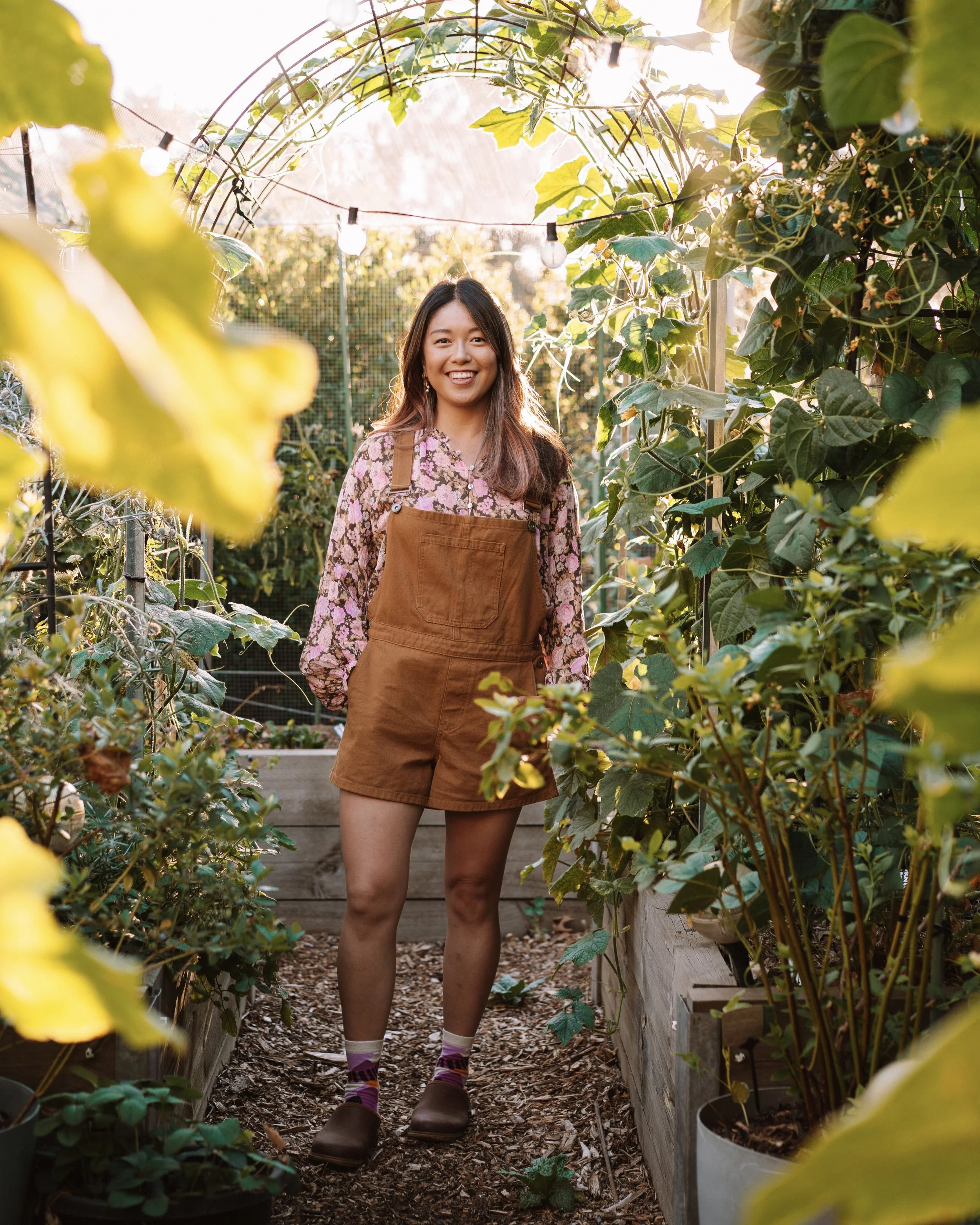
Connie among a lush pocket of green
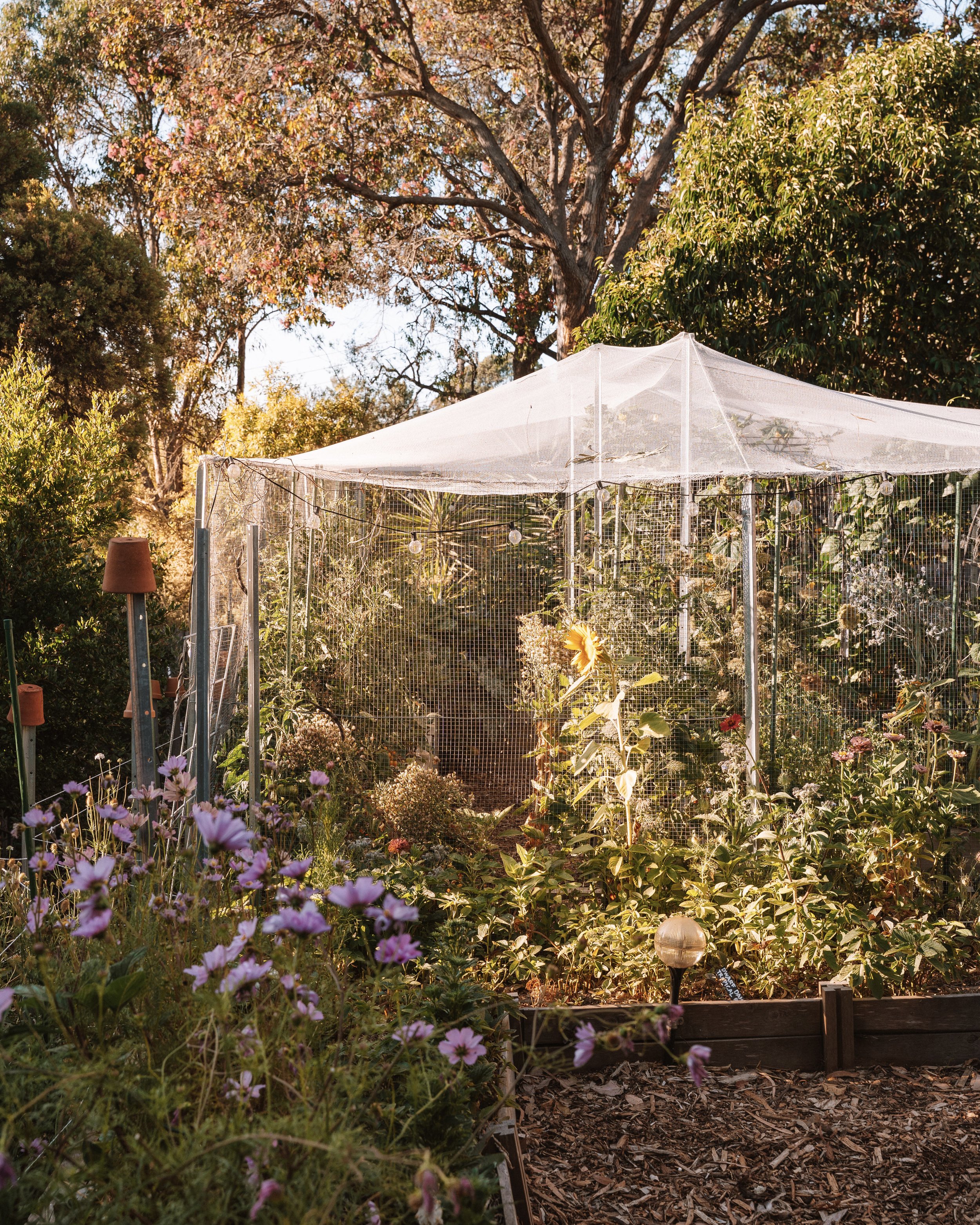
The netted enclosure, built by Connie and her father
Pulling into Connie’s driveway in Melbourne’s outer east, the house itself feels familiar – a solid, brown-toned suburban home reminiscent of the 70s and 80s builds that dot the area. But it’s the garden that immediately signals something different.
Instead of being ushered indoors, we’re welcomed through the side gate, where the backyard opens up. As we begin to explore, Oakie – Connie’s dog – pads along beside us, weaving between pots and pausing to sniff the air before settling in the shade.
The space reads more like a nursery in motion – pots, tools, climbing structures and netting layered with intention. It’s clear this garden isn’t ornamental, but deeply productive, shaped by care, patience and curiosity. Connie moves through it with ease, pointing out what’s growing, what’s resting, what will flower next. Every bed has a purpose. Every plant has a story.
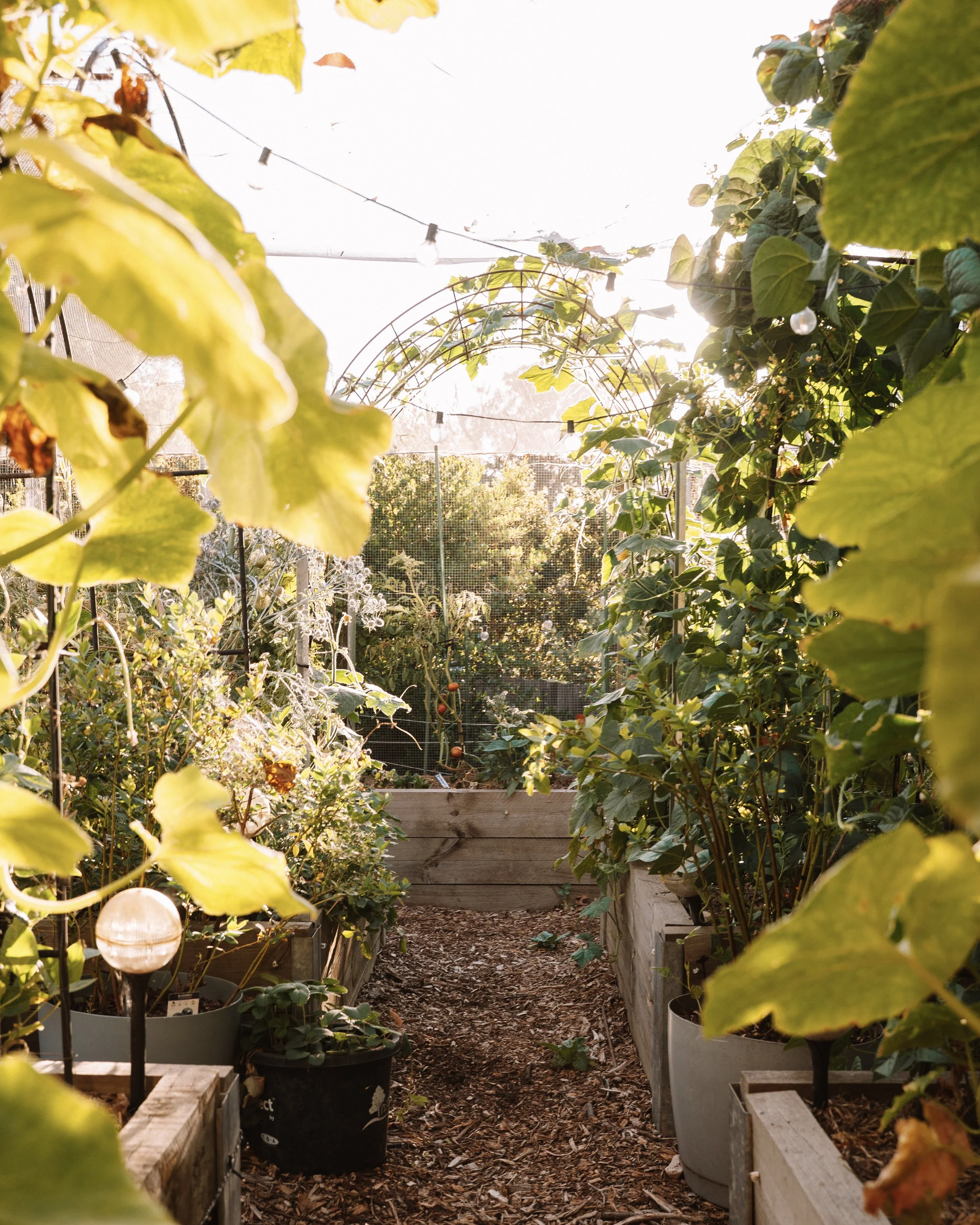
A garden built slowly, with intention
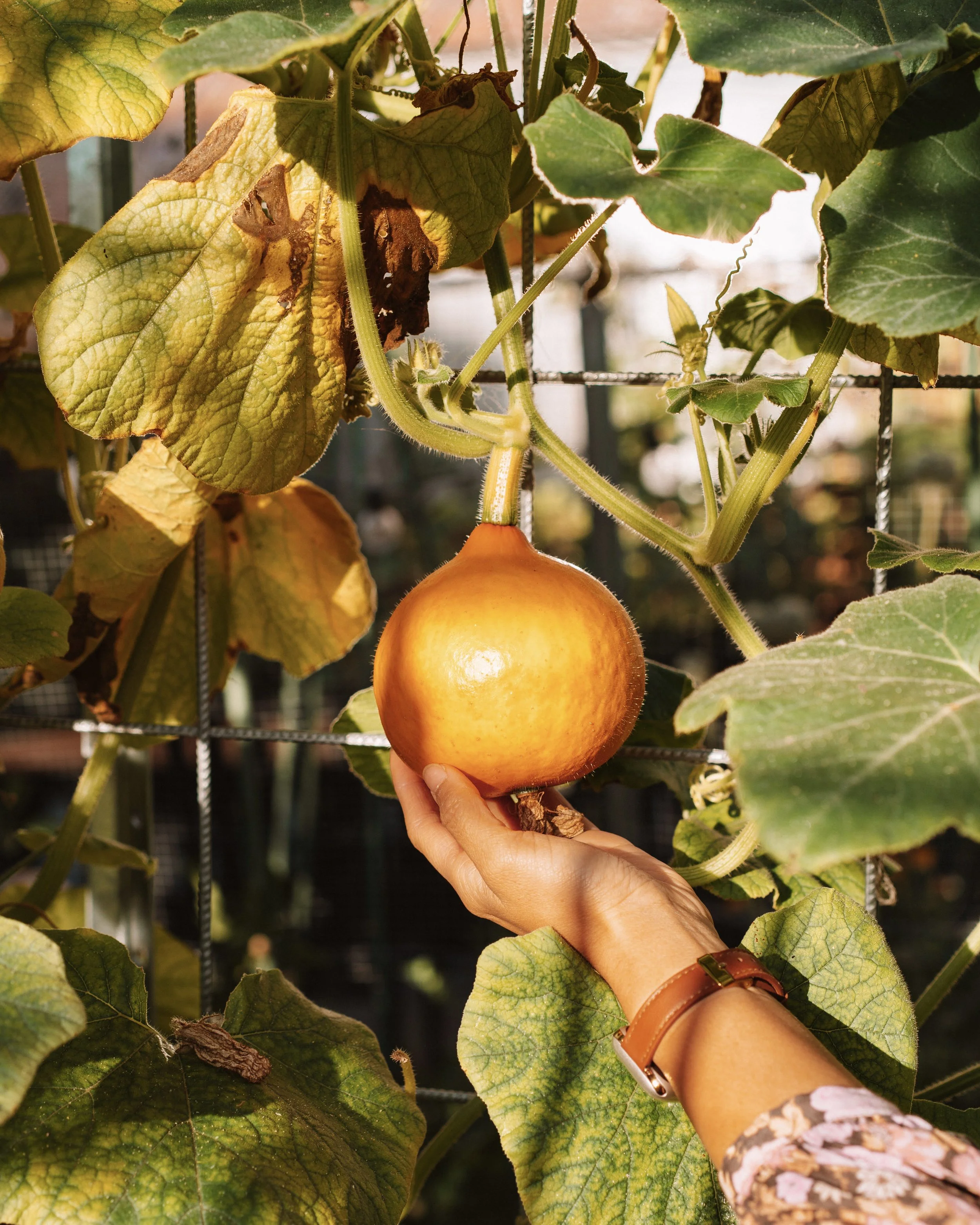
Pumpkin vines weaving over archways
At the heart of the garden sits a netted enclosure, built by Connie and her father – an engineer with a knack for tinkering and figuring things out – using aviary mesh and bird netting. It’s a practical solution born from shared problem-solving.
Inside, timber-retained beds form an ordered maze of colour and texture. Pumpkin vines weave over archways. Tomatoes ripen in shades of red and yellow. Asian vegetables – some hard to find even in specialty grocers – thrive alongside herbs and flowers, each chosen to support the other.
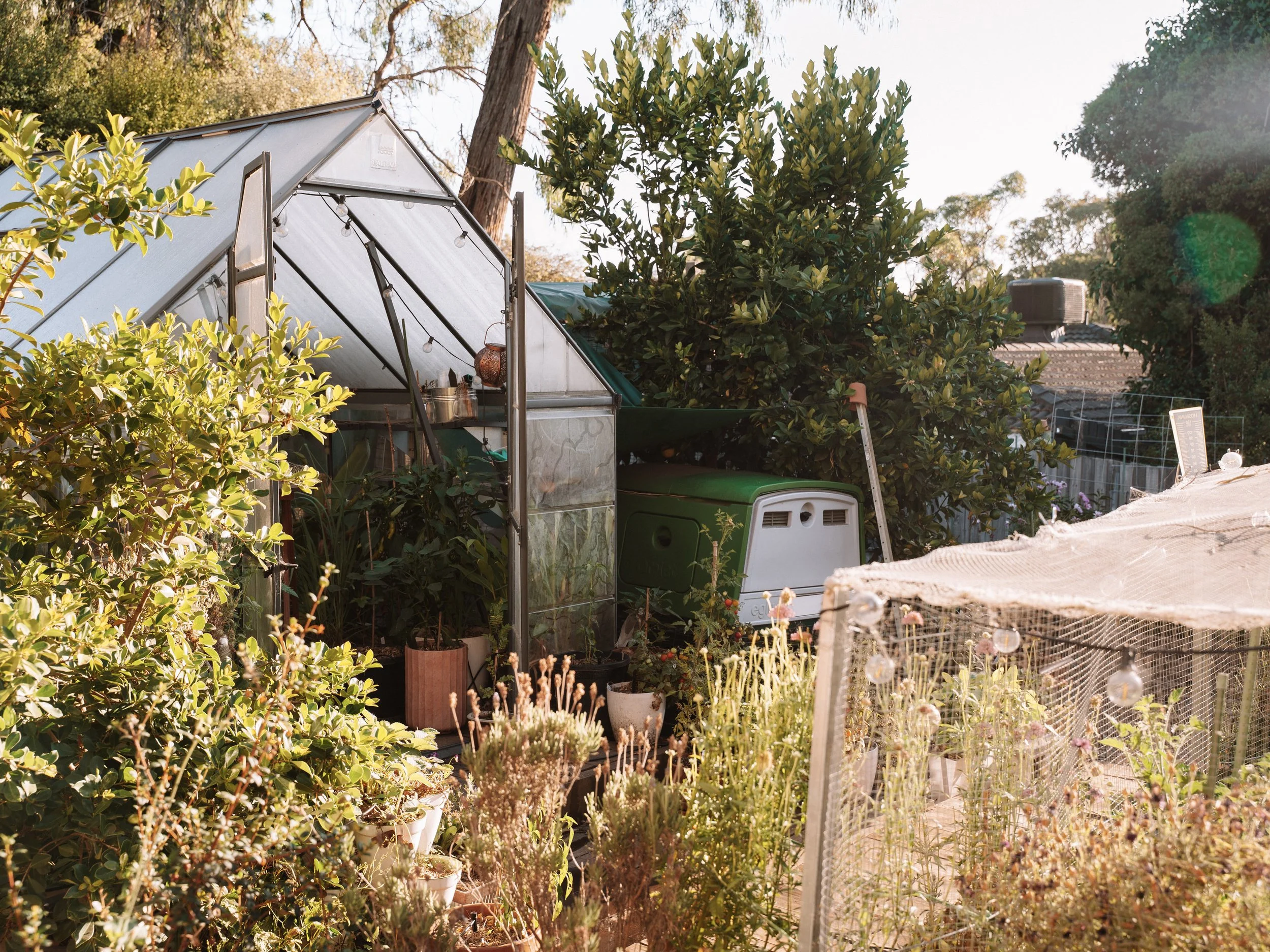
A simple flat-pack structure Connie assembled herself
Connie grows winter melon, water spinach, long beans, okra and eggplant – vegetables familiar to me from Filipino kitchens. We talk about how this produce is deeply tied to the meals she grew up eating, knowledge she also shares generously in her book Your Asian Veggie Patch. But here, on her patch, that same depth of understanding is offered just as enthusiastically, plant by plant.
Nearby sits a greenhouse – a simple flat-pack structure Connie assembled herself – where frost-sensitive plants are sheltered and seedlings raised each spring, positioned for easy daily access.
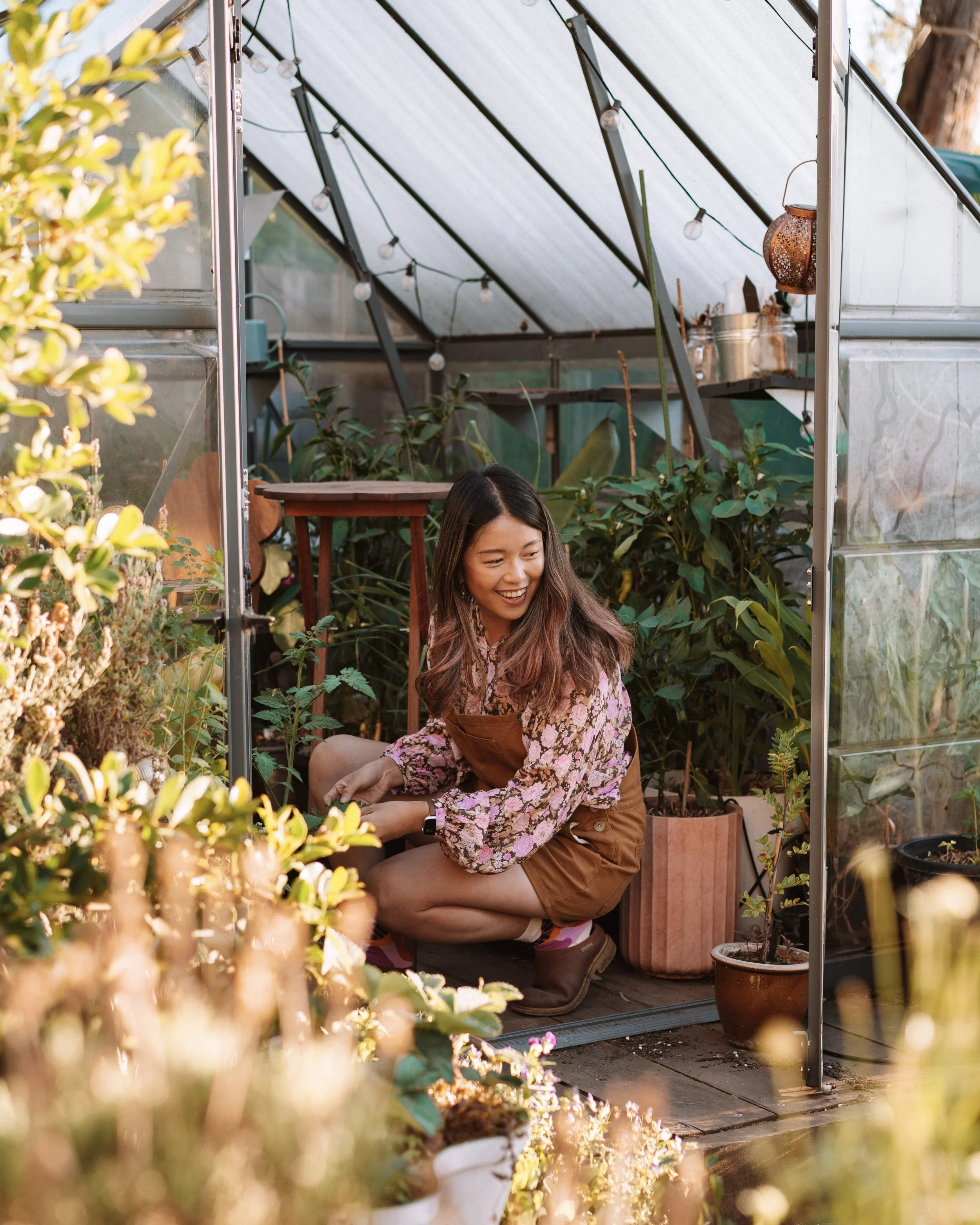
A moment in the greenhouse
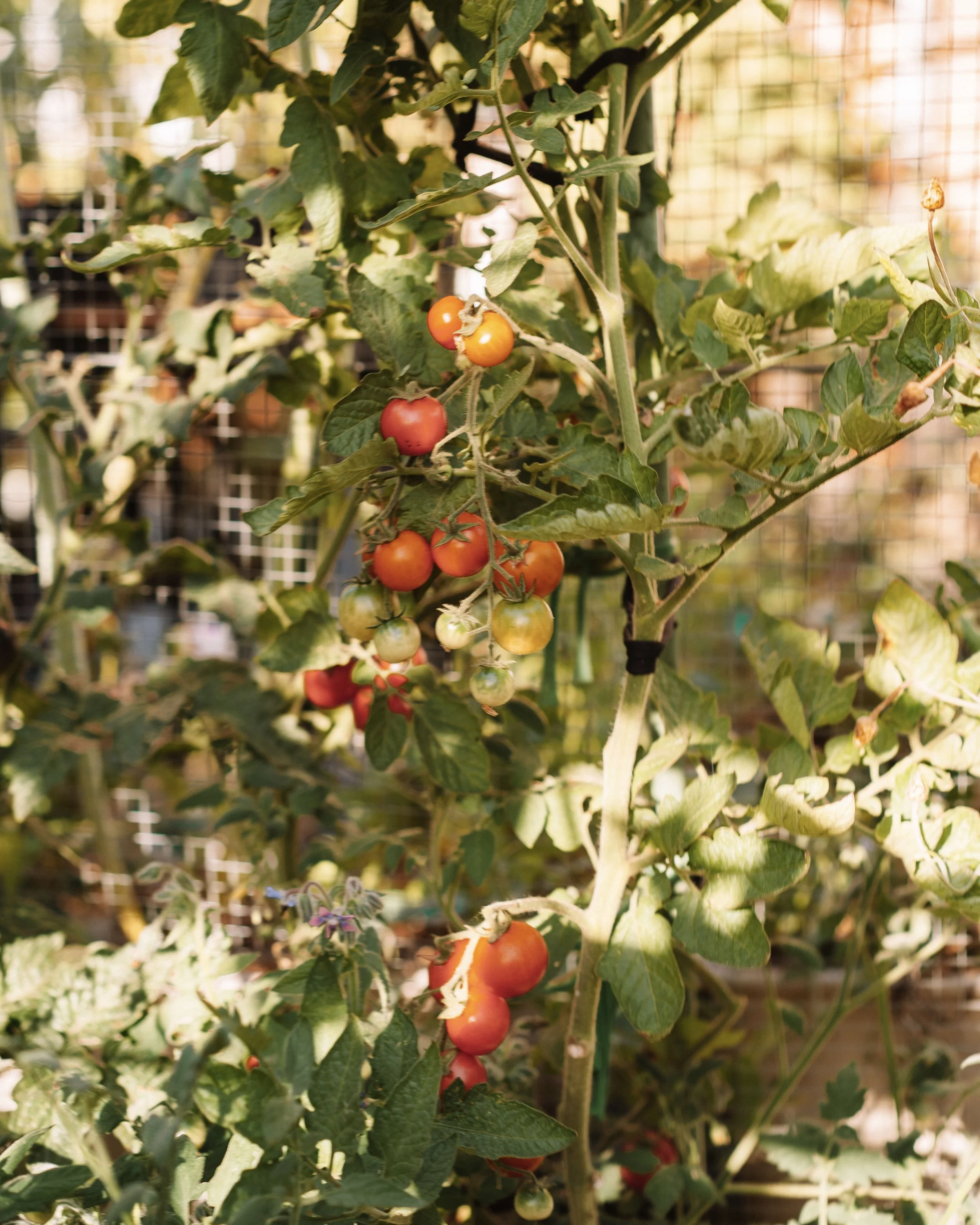
Tomatoes ripening in shades of red and yellow
Beyond the veggie beds, the rest of the garden reveals what makes this patch feel alive rather than curated. A corner is dedicated to a chicken pen, where six eager chooks provide eggs and contribute back to the soil. Nearby, a hand-built quail enclosure speaks to another of Connie’s passions.
Towards the front of the garden, almost hugging the house, Connie points out a section set aside for preparation work. Plants here have been grouped with intention as she readies for her show garden at the Melbourne International Flower & Garden Show in late March – a glimpse of the Asian garden she proudly advocates for in her book.
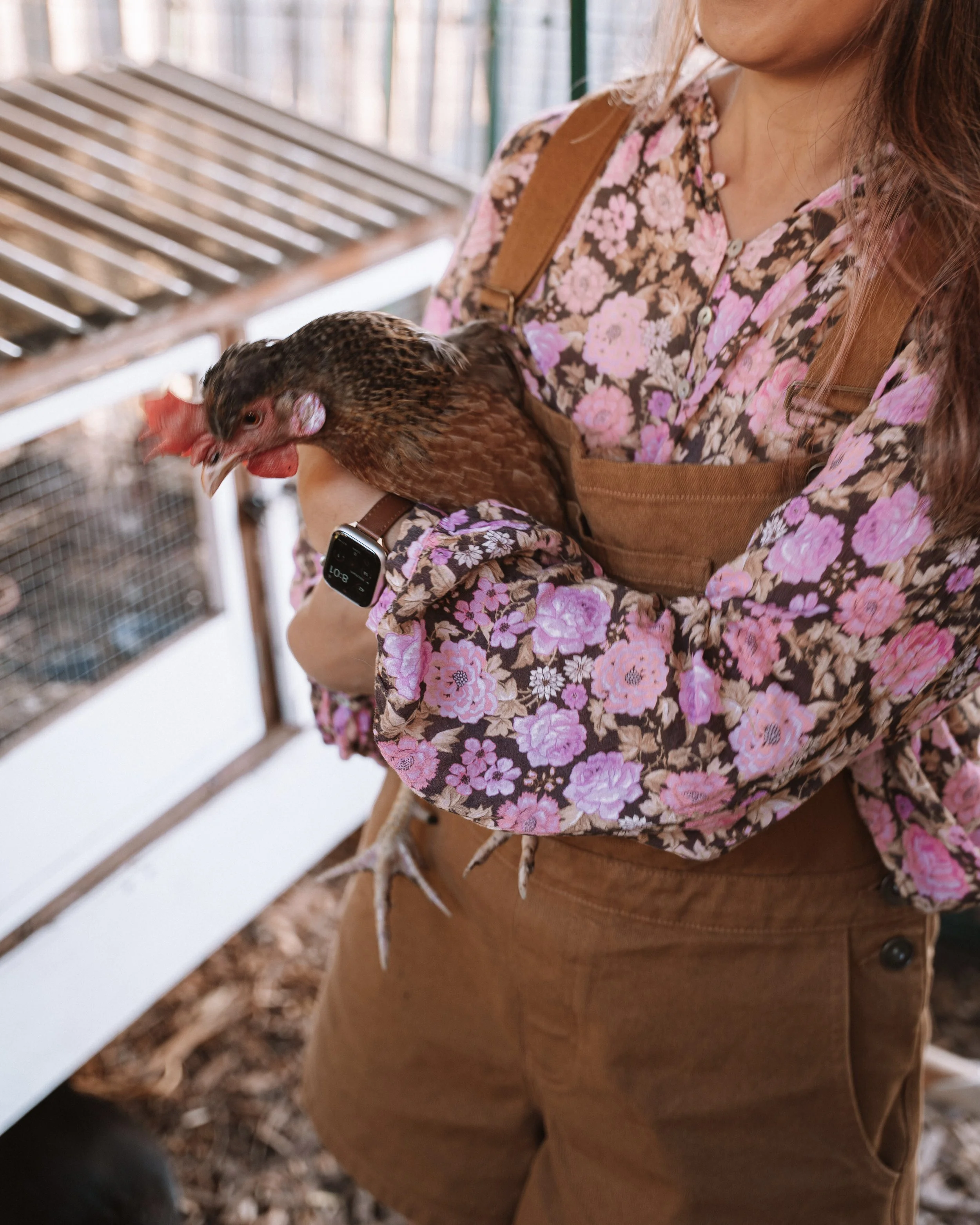
Connie holding one of her five chooks
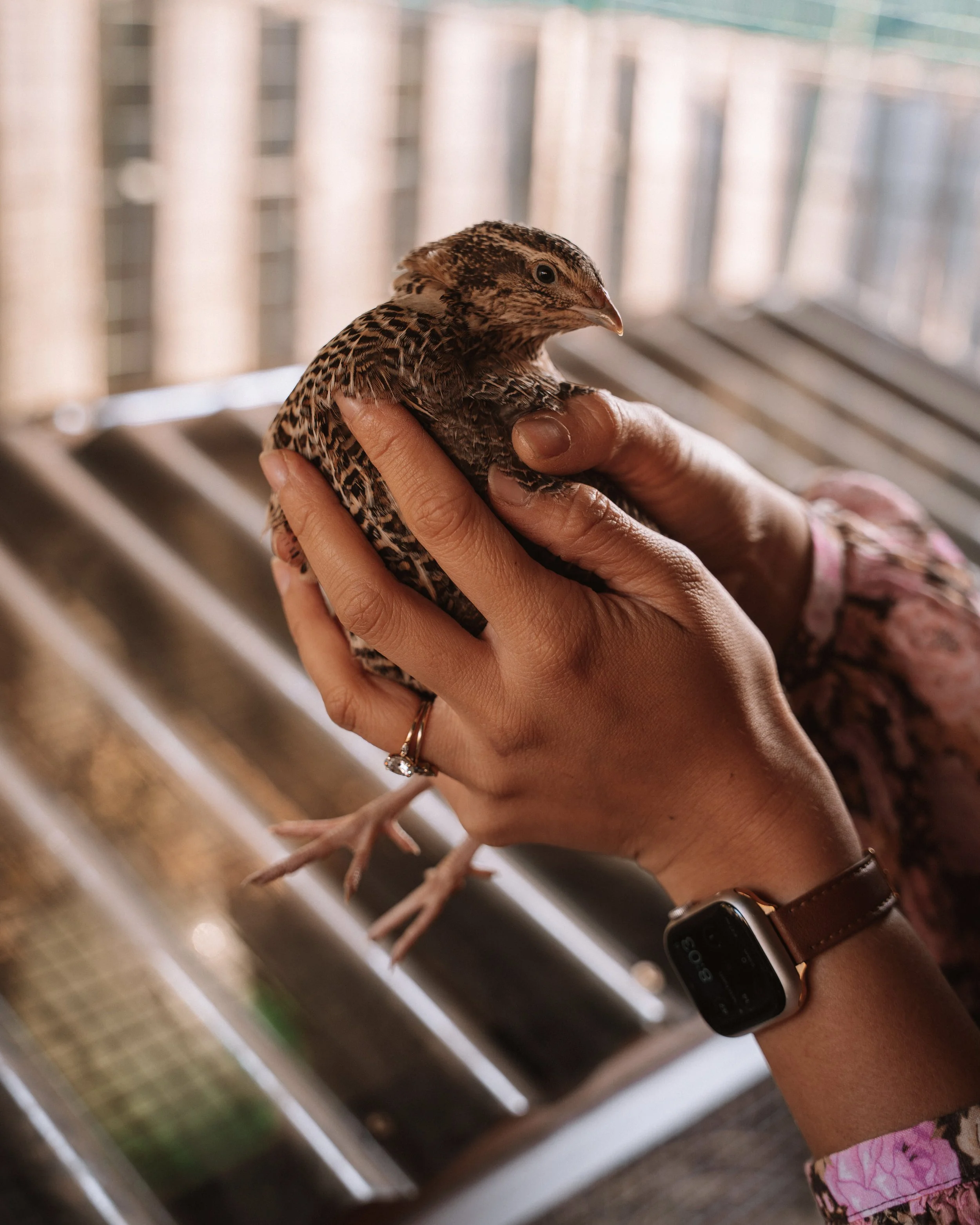
One of Connie’s quails, up close
We eventually head inside, where Connie gestures to the dining table apologetically, calling it her “dumping ground”. In reality, it looks like the back office of a working garden. Eggs stacked neatly. Bowls of crushed eggshells ready to be returned to the chicken feed for added calcium. Envelopes of seeds, carefully labelled. Notebooks filled with observations – what was planted, what thrived, what was harvested. It’s not clutter. It’s record-keeping. It’s care.
Gardening has always been tied to family for Connie. It began alongside her parents, piecing together knowledge through trial and error. They grew luffas and Asian greens long before she knew their names. When Connie moved out, she missed the taste of home – so she planted it.
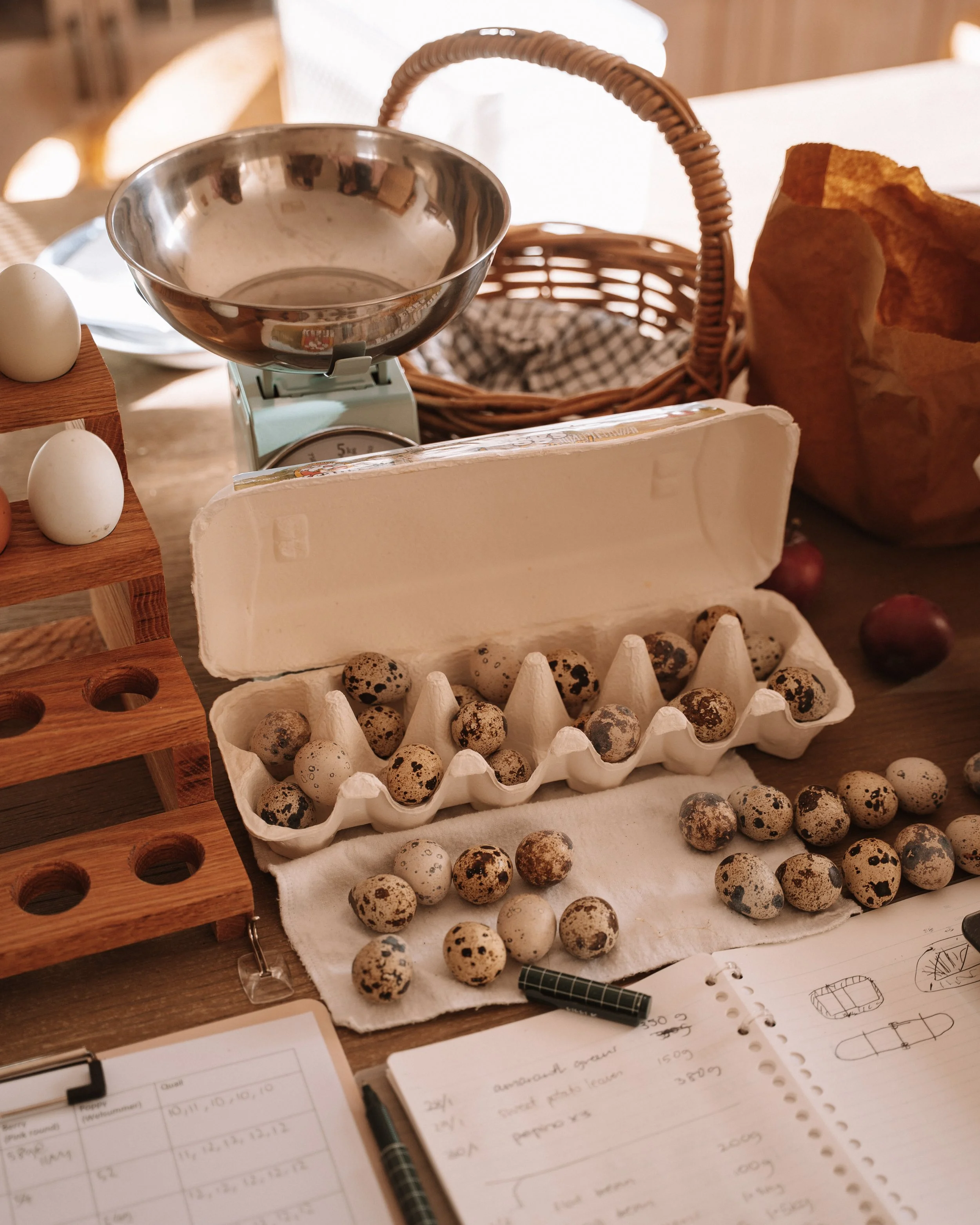
Fresh eggs resting on the dining table
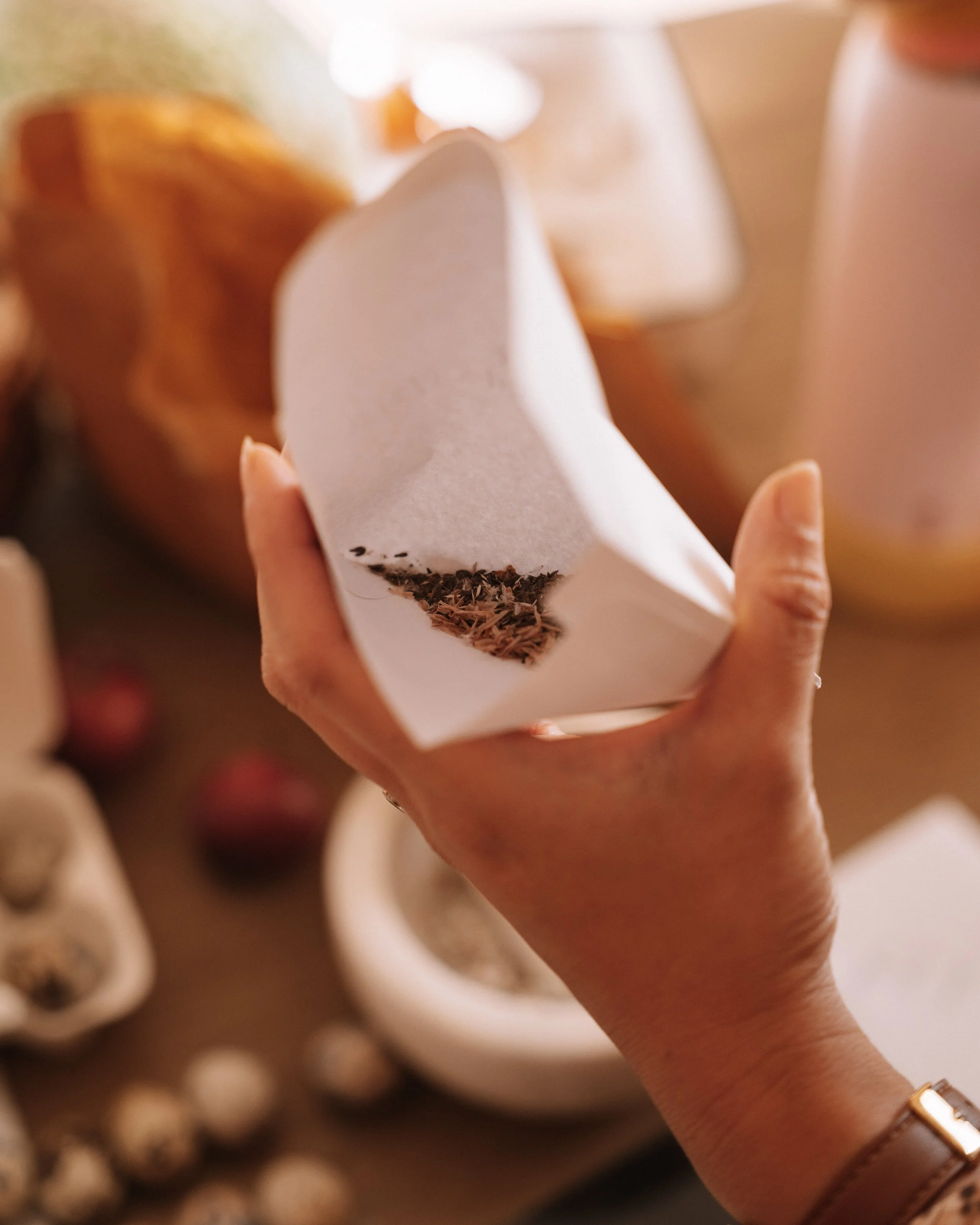
Connie showing envelopes of seeds
From the balcony, looking out over the garden, the logic of the layout comes into focus – the pathways, the zoning, the way each section feeds into the next. What felt immersive and abundant at ground level now makes sense in full.
In a country where the backyard has long symbolised identity, this is Connie’s patch. And in every vine, seed and harvest, it tells a story of how culture doesn’t just survive migration – it adapts, roots itself and flourishes.
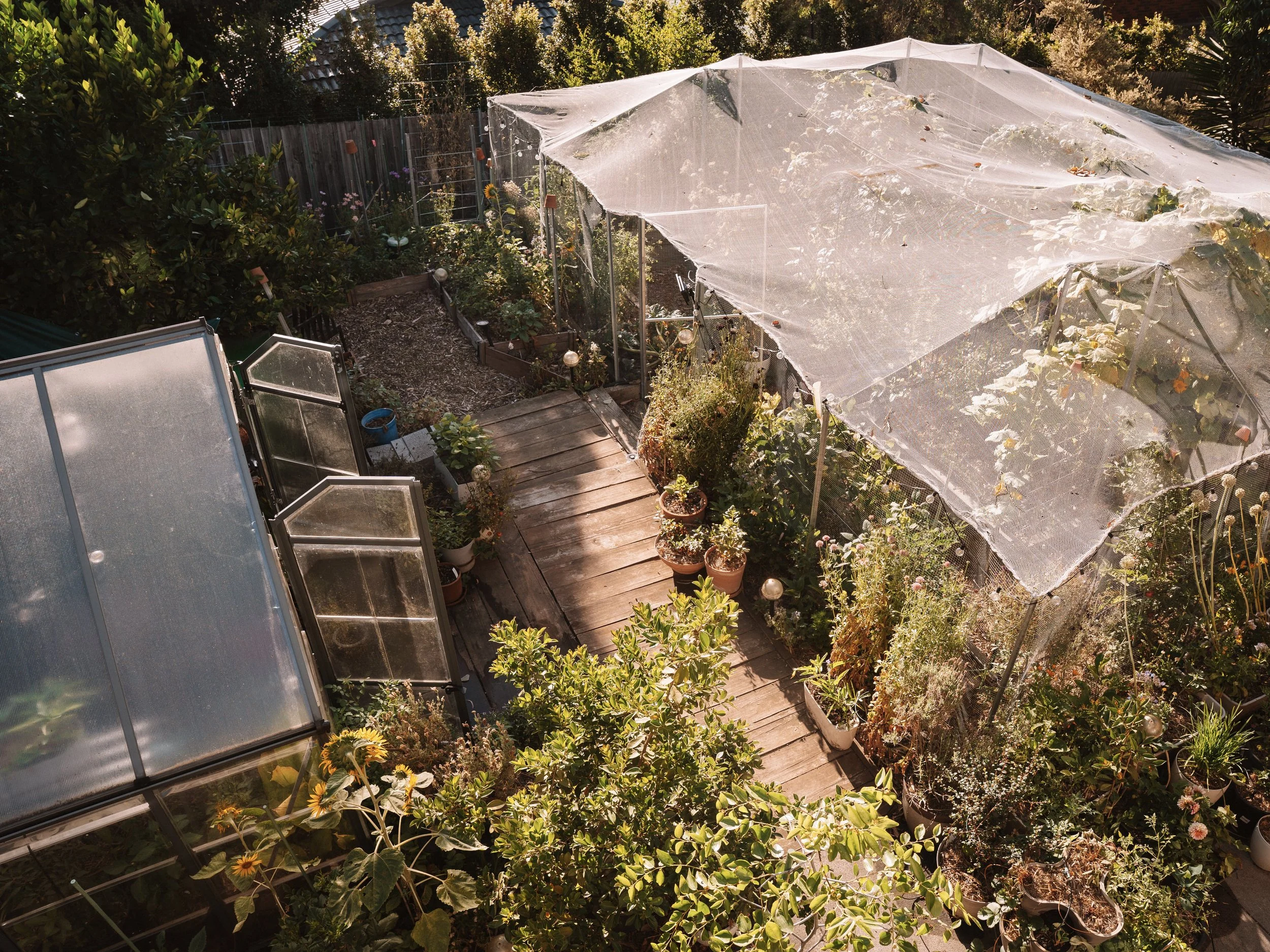
A bird’s-eye view of Connie’s garden