The Whiplash of ‘Chinese-Maxxing’
Originally shared on social media on January 30, 2026, and later published on Doris’s Substack.
Asian-Australian writer Doris Chang reflects on the sting of watching white people borrow from the very culture its own people were once ridiculed for – embracing its aesthetics when the internet decides they’re cool, then discarding them when the trend moves on. A freedom those who actually belong to that culture have never had.
So apparently everyone is turning Chinese now; ‘Chinese-maxxing’ is the new trend and Tang jackets are going viral, as is the phrase ‘you met me at a very Chinese time in my life’.

At a life-drawing session hosted by fellow Adelaide creative Grace Harper.
Photography: Olivia Oates
Tell that to the girl who spent most of her childhood wishing she was white. Who grew up only ever seeing Chinese men represented as feeble and effeminate, and Chinese women as invisible or hyper-sexualised. Who was teased for the thickness of her brows and the flatness of her nose.
Who lived in eternal fear that the other children would comment on the lunches that her mother so carefully packed her for school. Who was surprised and mortified when she was scolded for chewing too loudly by a friend’s parent. Who stood stony-faced when kids chanted ‘ching-chong’ and stretched their skin taut over their eyes.
Who never thought any man would want her unless he had ‘yellow fever’. Who was told ‘you’re not like other Asians, you’re basically white’ as a compliment.
Who struggled to find eyeliner tutorials that worked for her eye shape, glasses that sat on the bridge of her nose, hairdressers who understood her hair texture, or makeup artists that would accentuate rather than distort or minimise her features.

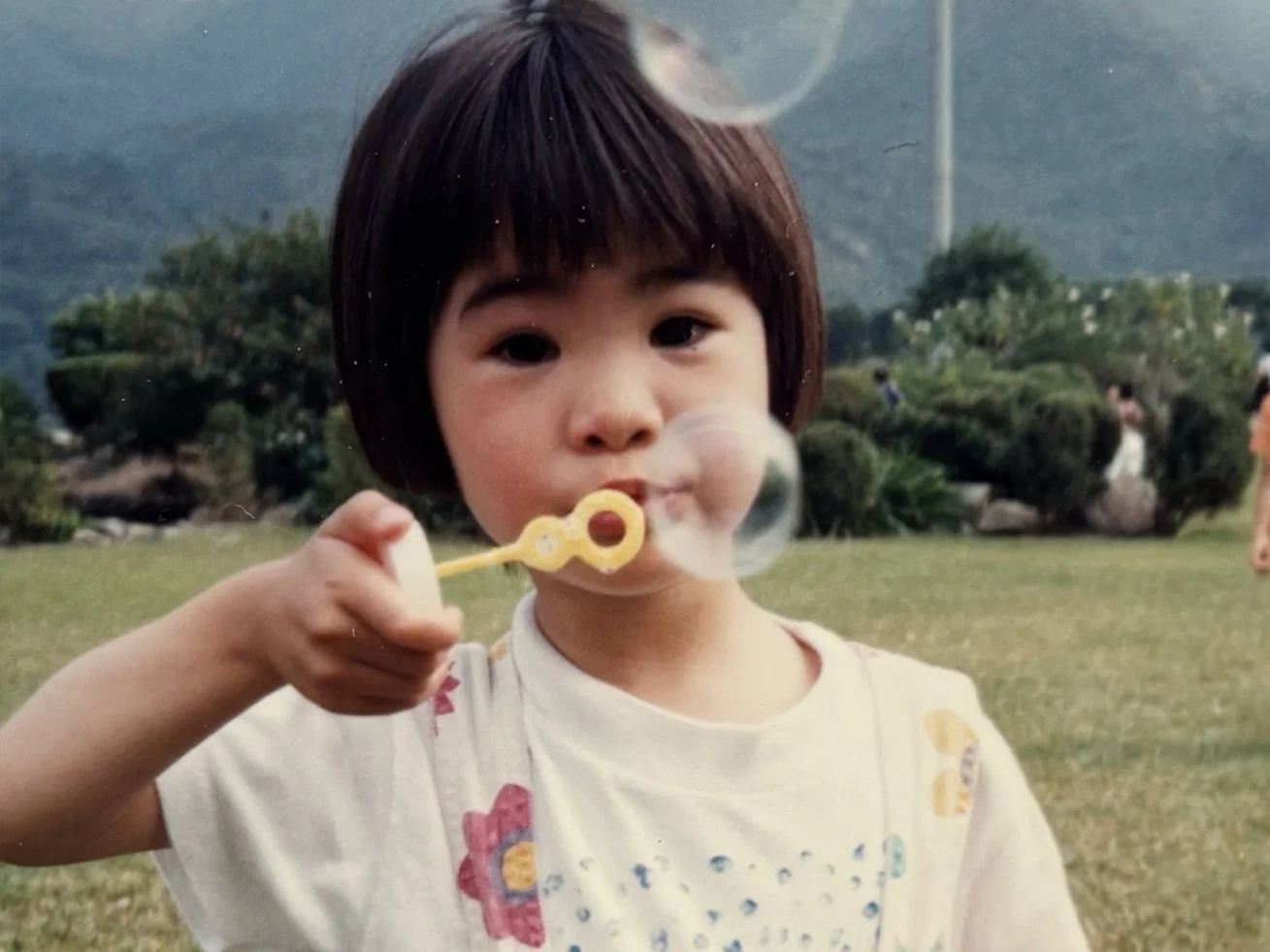
Kindergarten playgroup, surrounded by a sea of blonde heads.
Most of these examples are from many years ago, and representation has come a long way since then. But. It was only a few years ago that hate crimes against Asians (targeted towards the Chinese community, but with many others affected due to mistaken identity – because of course) were rampant in the United States, spurred on by a president who repeatedly referred to COVID-19 as the ‘China-virus’.
Were you at a very Chinese time in your life then?

Playing at lion dancing at home, with my elder sister Cindy taking the lead on the left.
Fashion is by nature a melting pot; drawing inspiration or design elements from other cultures is not necessarily appropriation.
But even if you’re not putting that much thought into the clothes you wear as an individual, as an industry, fashion is political. There is something about the rapidity, scale and lack of nuance surrounding this trend that feels sleazy and superficial and is resulting in imitations with huge mark-ups that are mislabelled or stripped of context, marketing campaigns that may look like inclusivity to some but are positively cringeworthy to the people they supposedly represent, and businesses that are leaning heavily on this trend to sell products without taking the opportunity to collaborate with Chinese designers or feature Asian models.
The fast-fashion cycle is problematic enough, but when cultural aesthetics are sucked into a system that fully embraces fleeting trends and cutting corners, the line between appreciation and fetishisation gets pretty blurry.
Trends change faster than meaningful shifts in perception, and you can’t rebrand over decades of systemic racism in just one marketing campaign.

The Mid-Autumn (Full Moon) Festival usually falls around the same time as my birthday. One year, my mother decided to combine the two celebrations – much to my anxiety.
Appreciating and participating in other cultures is a beautiful thing when it’s approached with genuine curiosity and respect – but when you’ve spent an entire lifetime reclaiming your identity, seeing others adopt it so light-heartedly because a meme or hashtag is going viral feels like a special kind of insult.
Amid all the noise, it seems pertinent to clarify: ethnicity is not a trend or a costume that you can try on for a season.

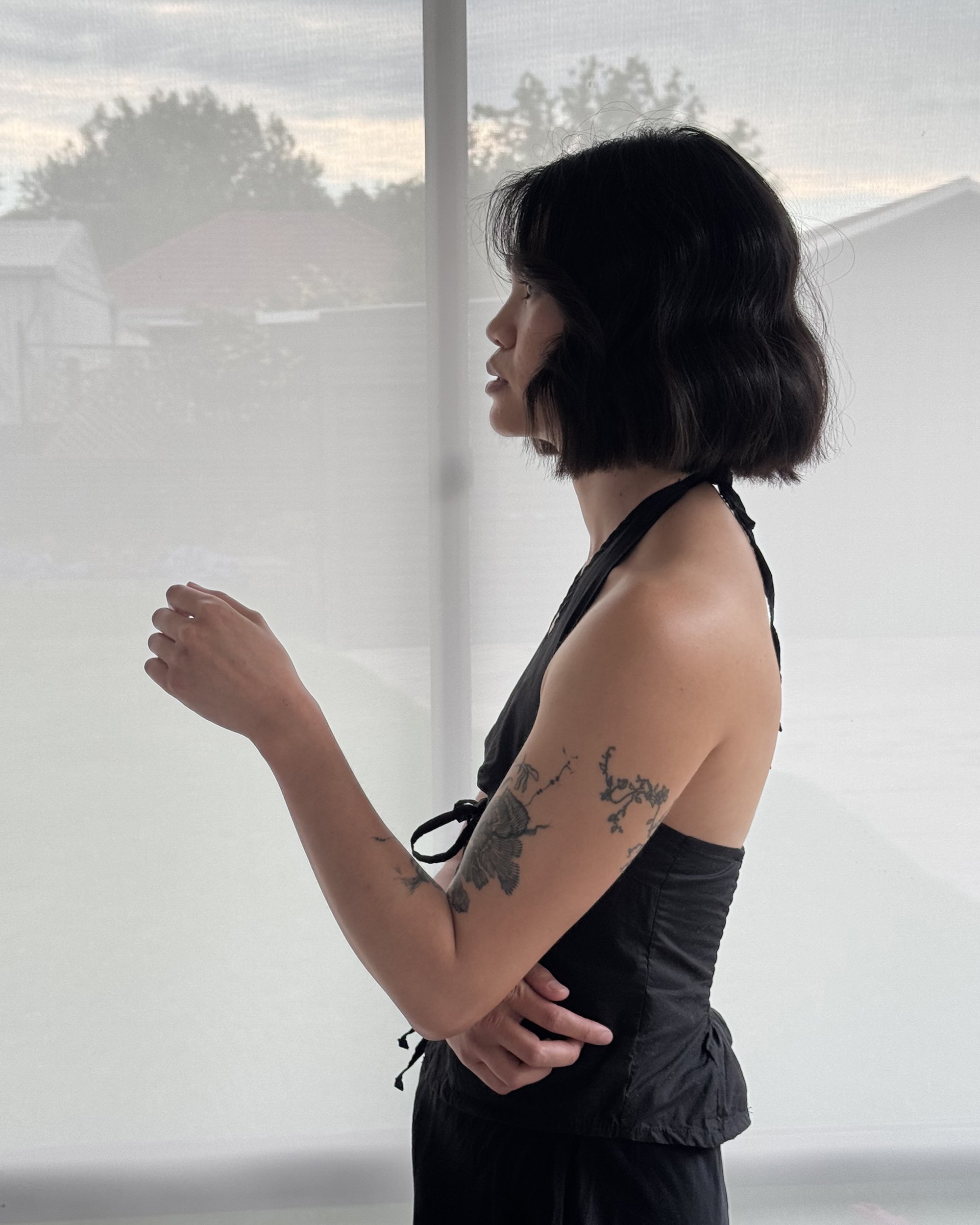
A recent portrait taken in a friend’s sunroom, finally comfortable in my own skin.
If you’ve never been asked where you are from in the country that you were born in, if your love language isn’t cut fruit and home-cooked meals, if you’ve seen yourself and your family represented as main characters your whole life, if you’ve been told you were loved before you got into a romantic relationship – then no, you’re not ‘turning Chinese’.
If nothing else, I urge you to be sceptical of any activity that profits off the legacy of a marginalised community whilst experiencing all of the privilege of not belonging to that community – and that you see, celebrate and respect the culture behind the aesthetics even after the trend passes.