Homecoming: Vietnam, With Tyron Tran
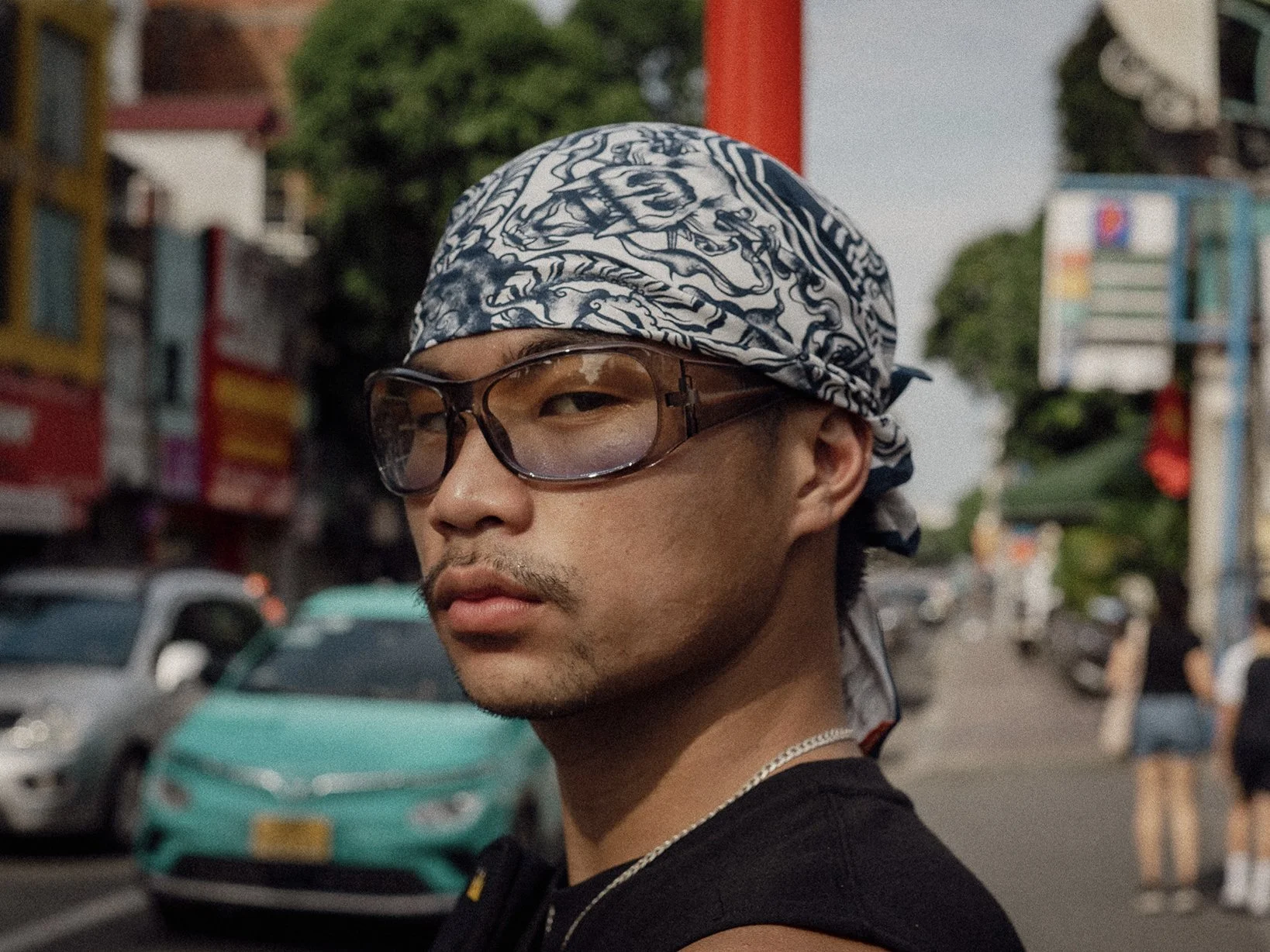
Photo Credit: James Tran
What does home mean when it’s learned, not lived? In this Homecoming feature, artist Tyron Tran reflects on connecting with Vietnam as a second-generation migrant. Through travel, creativity and family stories, he explores how curiosity about heritage can reshape identity and deepen a sense of belonging.
At 24, Tyron Tran lives in Naarm (Melbourne)’s eastern suburbs, moving between screens and streets, deadlines and daydreams. By day, he works across graphic design and filmmaking within the creative industry. By night, he returns to quieter work – art as process and personal language. He believes his purpose is simple and ambitious at once: to build bridges between ideas, people and what’s felt and understood.
For much of his childhood, Vietnam lived at a distance. Not geographically – emotionally. His father and extended family fled the country by boat, carrying stories heavy with survival. Growing up in Australia, those stories didn’t always arrive neatly or gently. Add the loud, unfiltered presence of his Vietnamese relatives – overwhelming to a child trying to find his footing – and Vietnam became a place Tyron learned to resist. It felt intimidating. Confronting. A country to keep at arm’s length.
But resistance has a way of breeding curiosity.
For 22 years, Vietnam existed in fragments – family anecdotes, silences and inherited fear. Then Tyron went. And the body noticed first.
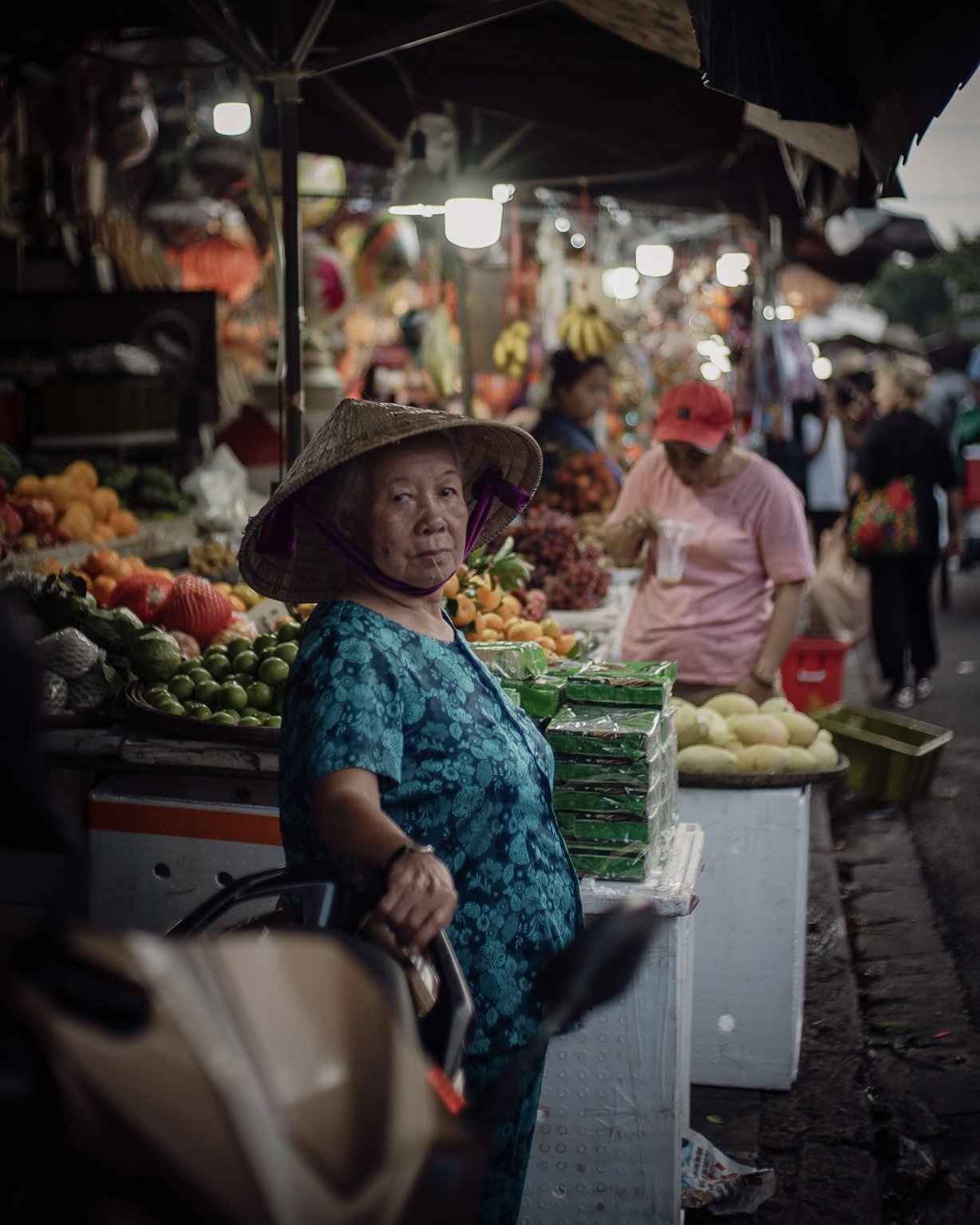
A street vendor in Hội An
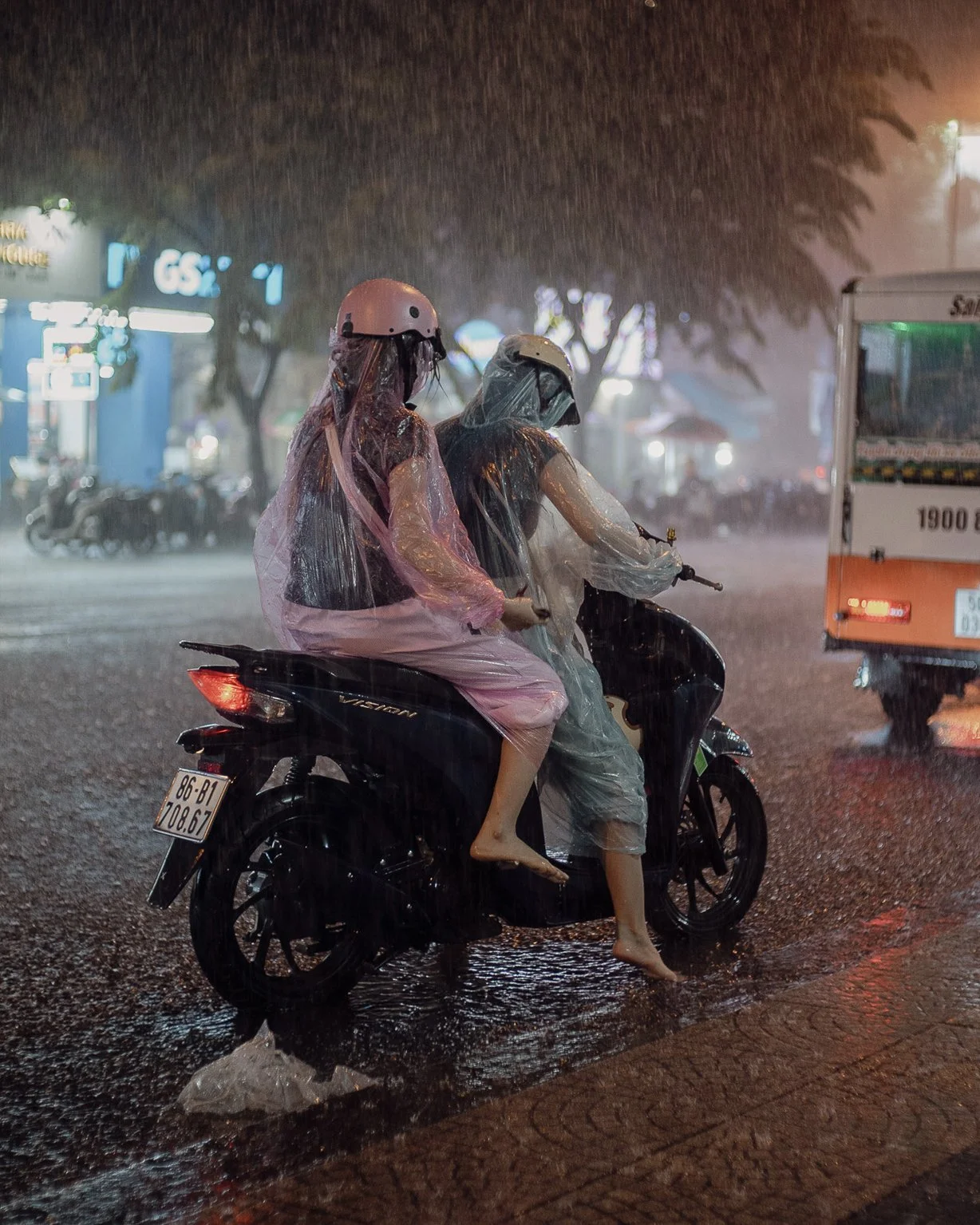
Saigon, captured in the rain
The heat. The humidity. The thick air that Melbourne never quite prepares you for. Where Australia can feel dry and brittle, Vietnam felt wet, alive and enveloping. His hands – usually clammy back home – calmed in the humidity. It sounds small, but it mattered. “Like I was made for it,” he says. A quiet, physical recognition. As if the body remembered something the mind hadn’t yet caught up to.
Each visit since has softened him further into the country. The food, the streets, the rhythm of daily life. Things once unfamiliar have become craved. Cơm tấm (Vietnamese broken rice). Cà phê sữa đá (Viet coffee). Meals that feel grounding and ritualistic. Comforting. Vietnam, he says now, feels like a second home. The kind you don’t grow up in, but grow into.
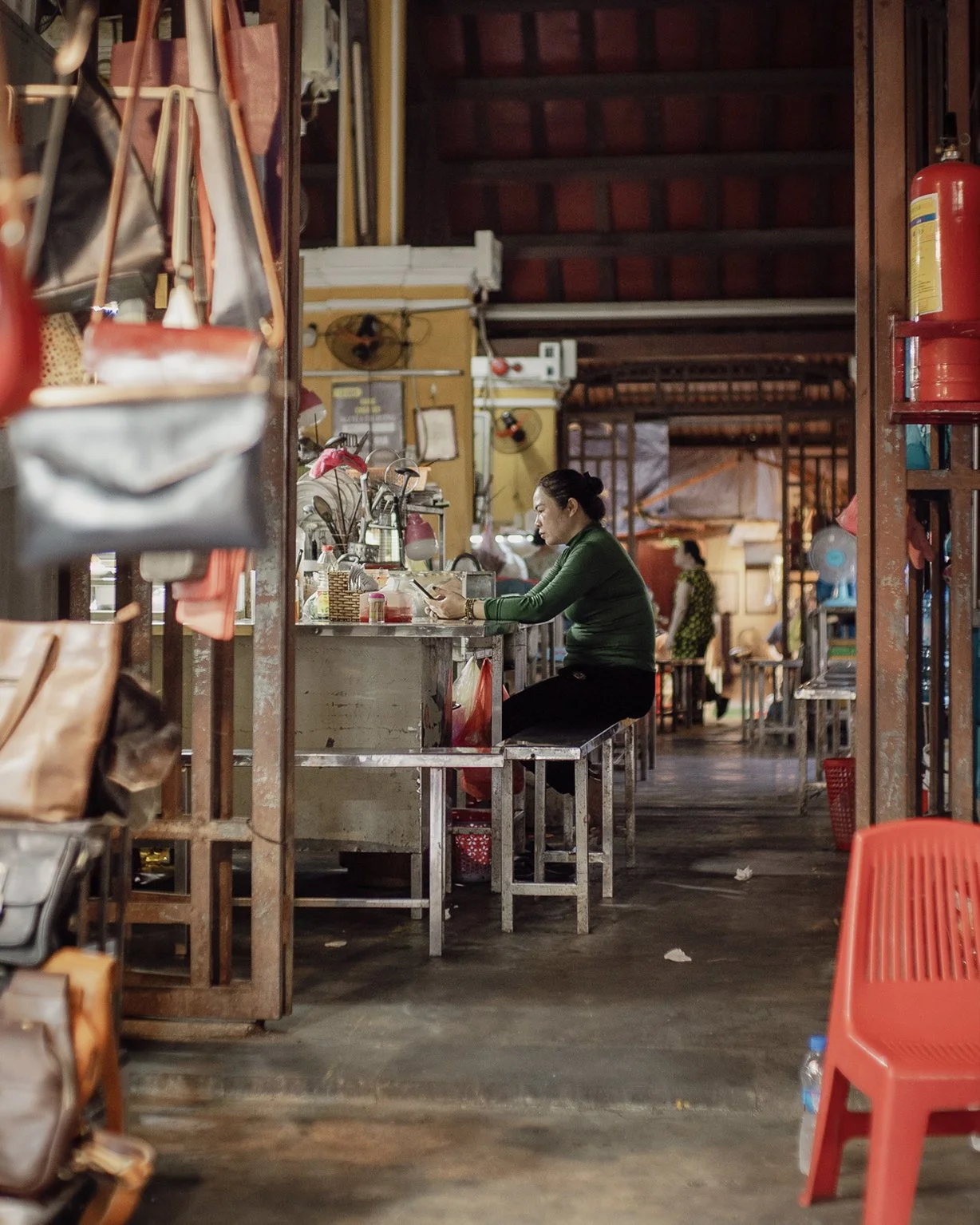
Lunch break at the markets
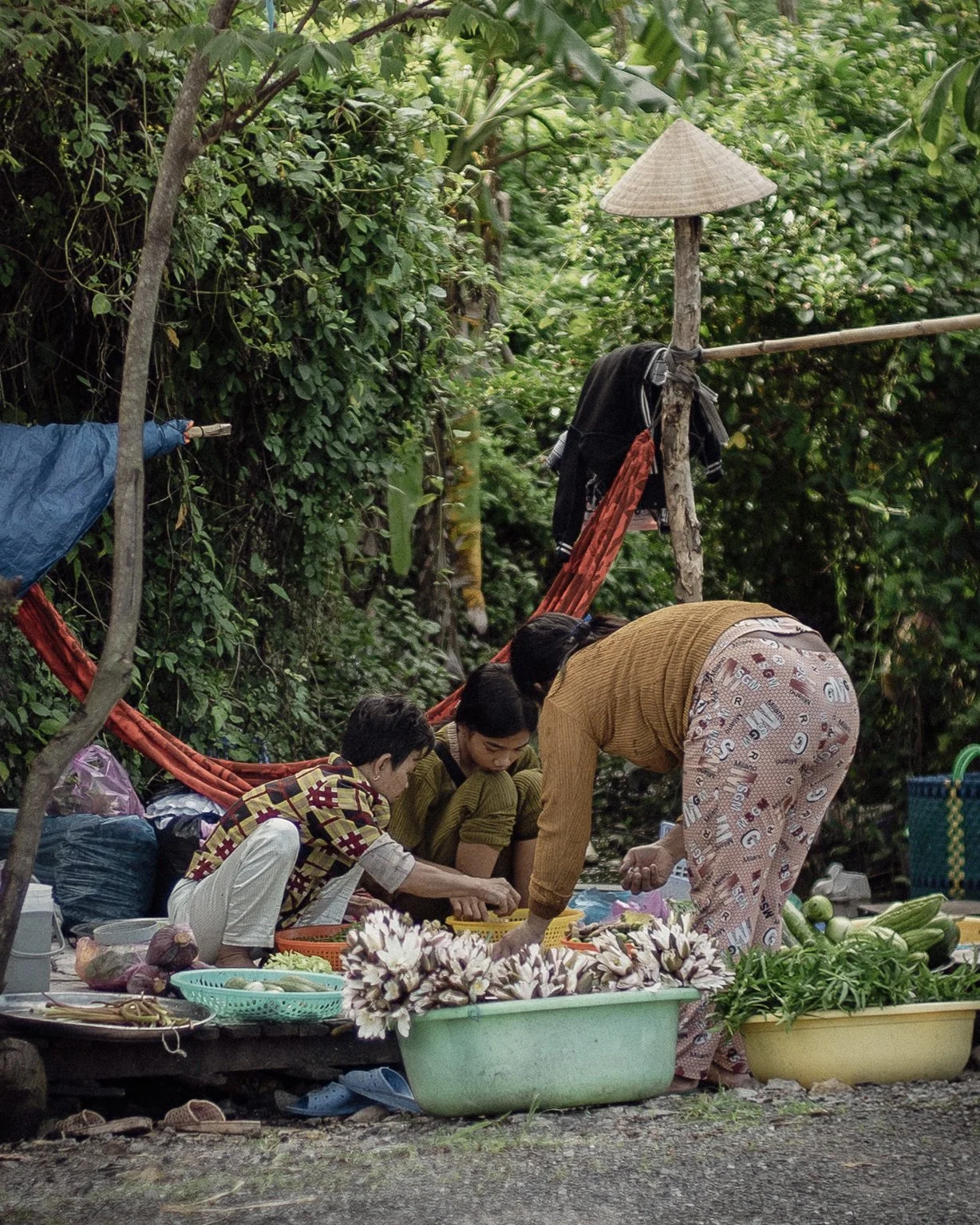
Locals sorting through produce
During a recent visit to Sóc Trăng, Vietnam revealed itself not through landmarks, but through the ordinary. Time spent with his partner Trace’s family became a lesson in togetherness. Relatives travelled from Saigon and Cần Thơ not for a special occasion, but simply to be near one another. To share space. To exist side by side. It was family life woven into the everyday – unhurried and deeply present.
For Tyron, raised in Australia’s pace of busyness and polite distance, it was striking. Here, family wasn’t an obligation or an event. It was a constant. Integrated. Alive.
Then there was Trace’s grandfather’s forest – land grown and tended over decades. Walking through it, Tyron felt something shift. A renewed respect for agriculture. For patience. For pride in what you build slowly, with your hands, over a lifetime.
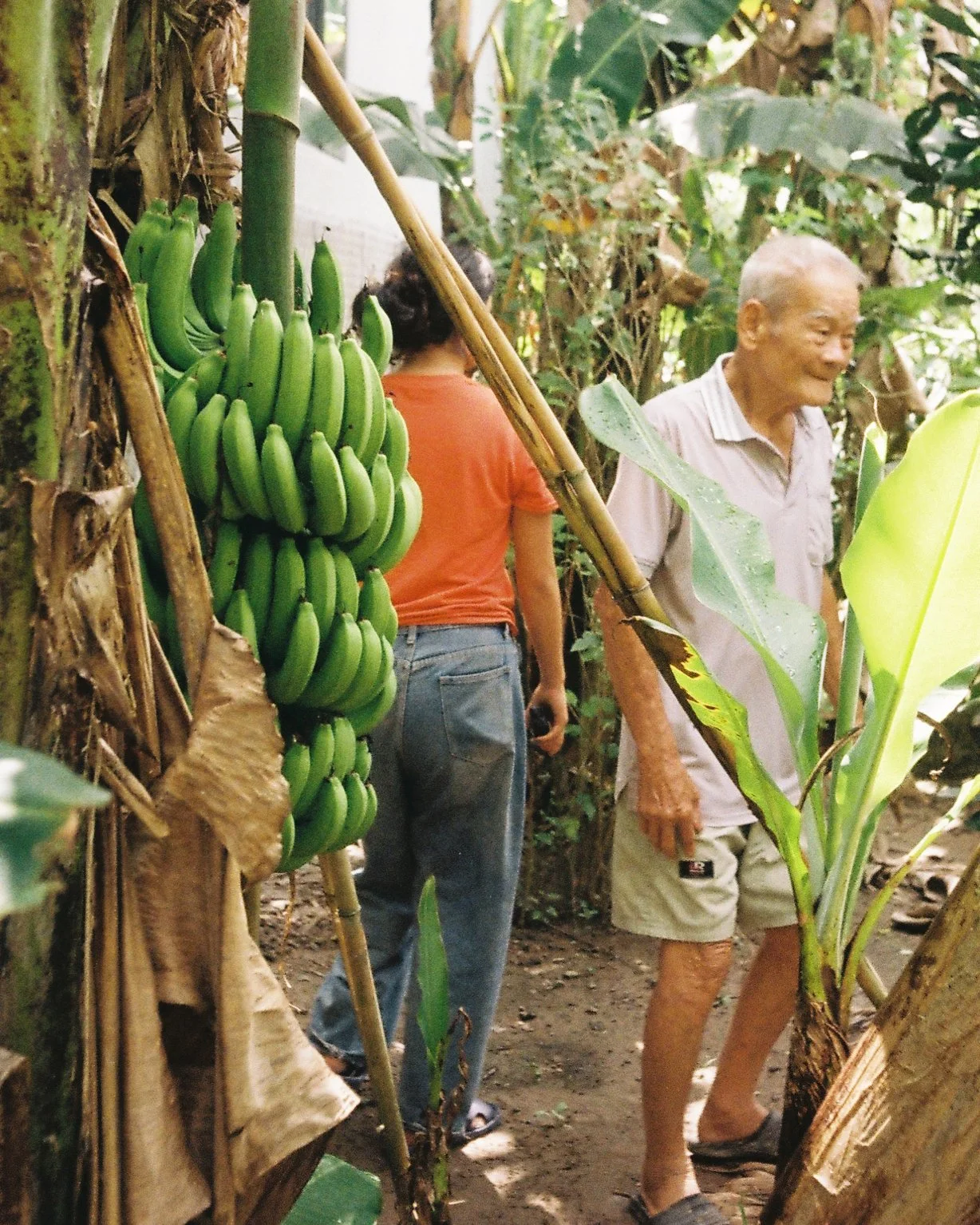
Time with family in Sóc Trăng
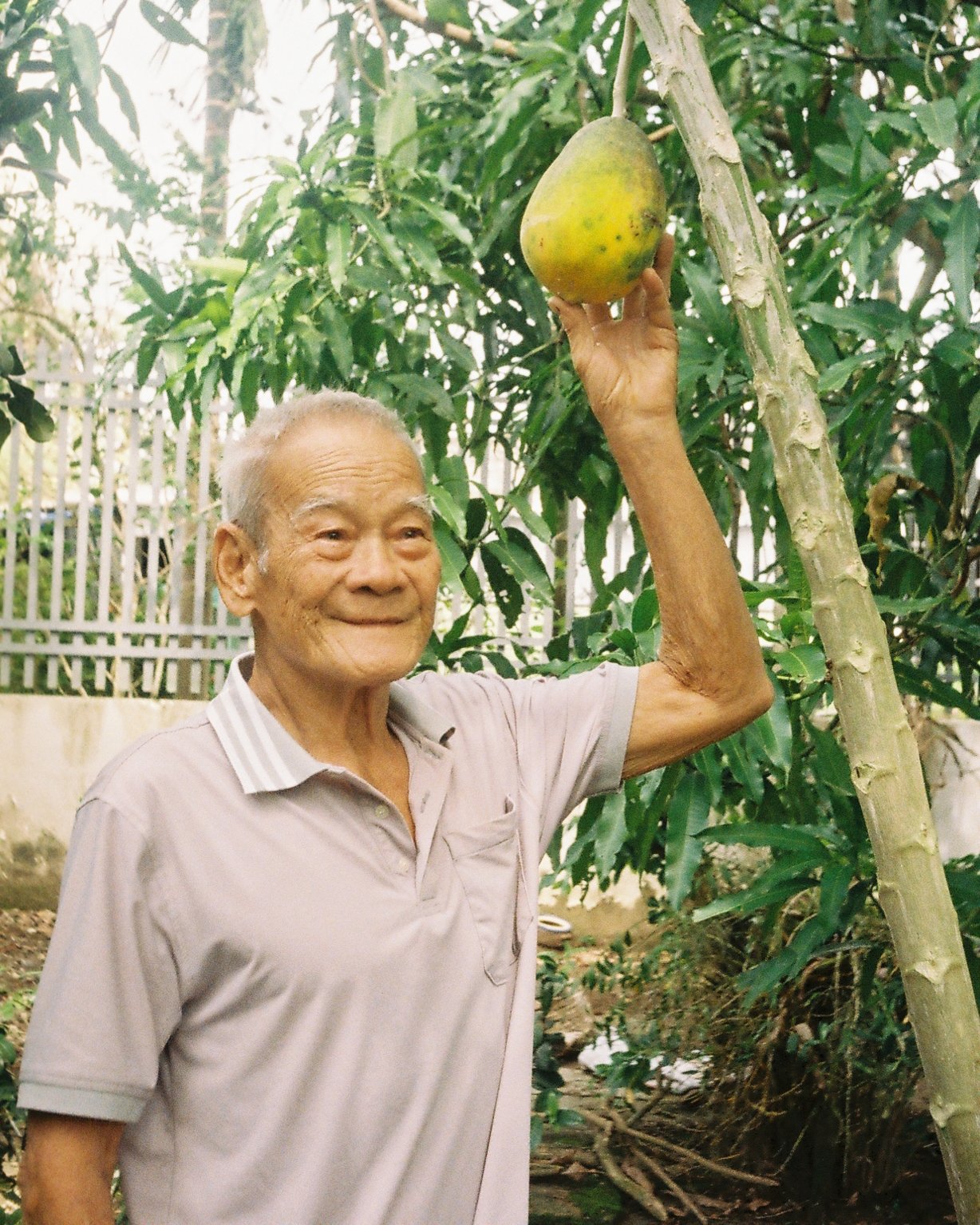
Fruit and land, grown over decades
When Tyron photographs Vietnam, he isn’t chasing spectacle. He’s drawn to texture and rawness – the overlooked details that hold a place together. Cropped frames of motorbike parts, rusted street carts slicked with burnt grease, plastic stools, fire hydrants painted the wrong colour and metallic surfaces worn smooth by use.
He photographs moments in time, knowing how easily they disappear. Not to romanticise them, but to honour them.
Still, homecoming isn’t always light.
Rạch Giá – the town where Tyron’s father was born – carried weight. Visiting it for the first time coincided with his father’s return after 46 years away. The house his father grew up in no longer existed. It had been taken by the government and turned into a primary school. Standing there, hearing stories and meeting family who never left, Tyron felt the full gravity of what migration costs – despite what it gives.
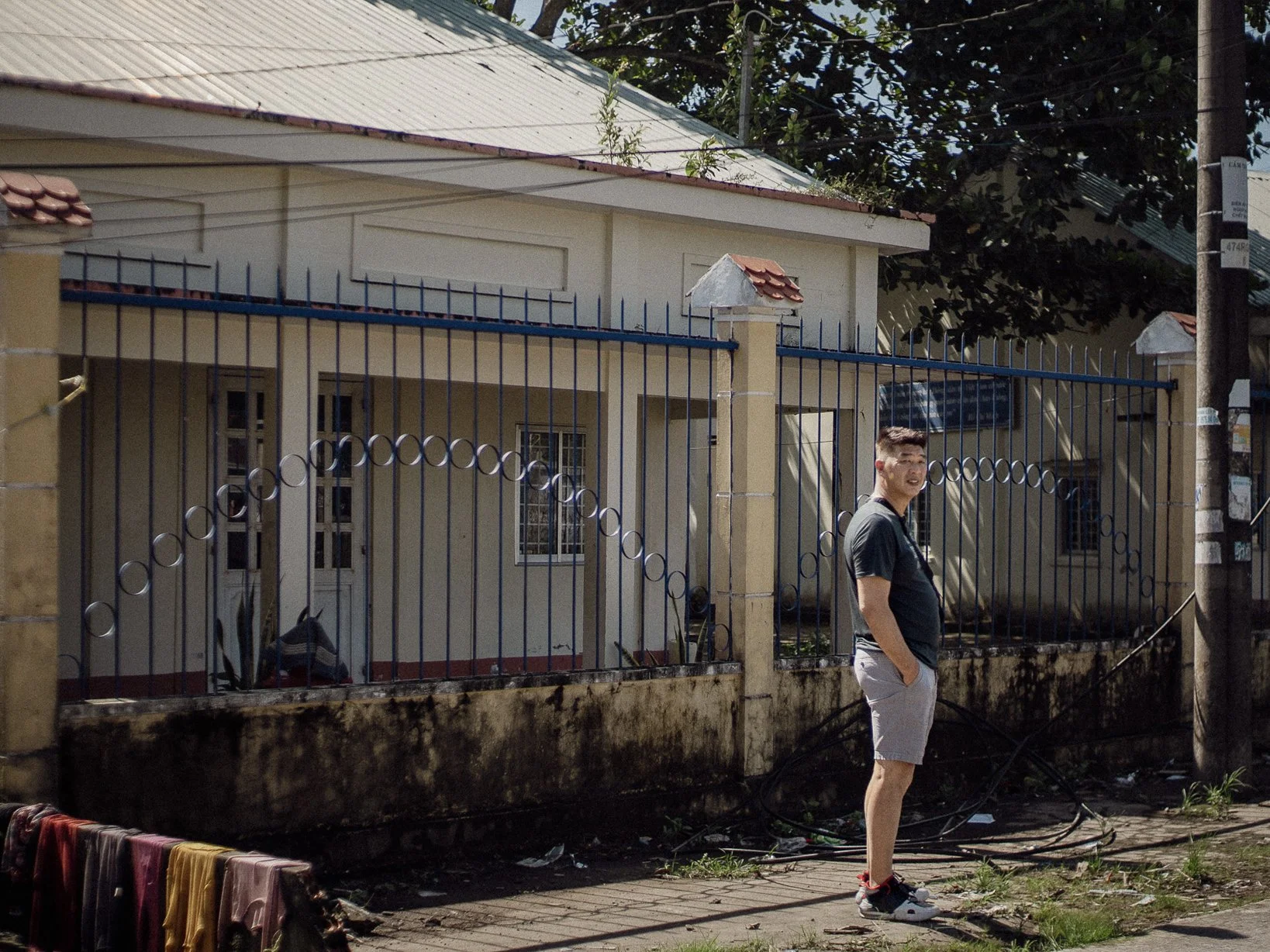
Tyron’s father outside his childhood home in Rạch Giá
Australia and Vietnam are incomparable in economy and lifestyle. He knows that. He feels the privilege of where he stands now. But that gratitude sits alongside grief – and respect for the choices made before he was born.
One image from that trip lingers. Taken on an iPhone, not a professional camera. Tyron and his father had gone into town to buy medication for his sick mother, stopping for lunch along the way. Cơm tấm again – the best he’s ever had. It cost 30,000 VND, about $1.80 AUD. In the photo, his father pours nước mắm (fish sauce) from a giant jar. Ordinary. Iconic. Perfect. A pure Vietnamese moment they still talk about today.
Vietnam allows Tyron to feel whole in a way Australia never quite has. Growing up, he often felt caught between worlds – distant from his Asian roots, yet never fully mirrored in his Western friendships. Vietnam gives him permission to lean into that complexity. To embrace his culture without explanation. To draw inspiration freely. To translate it outward through his work.
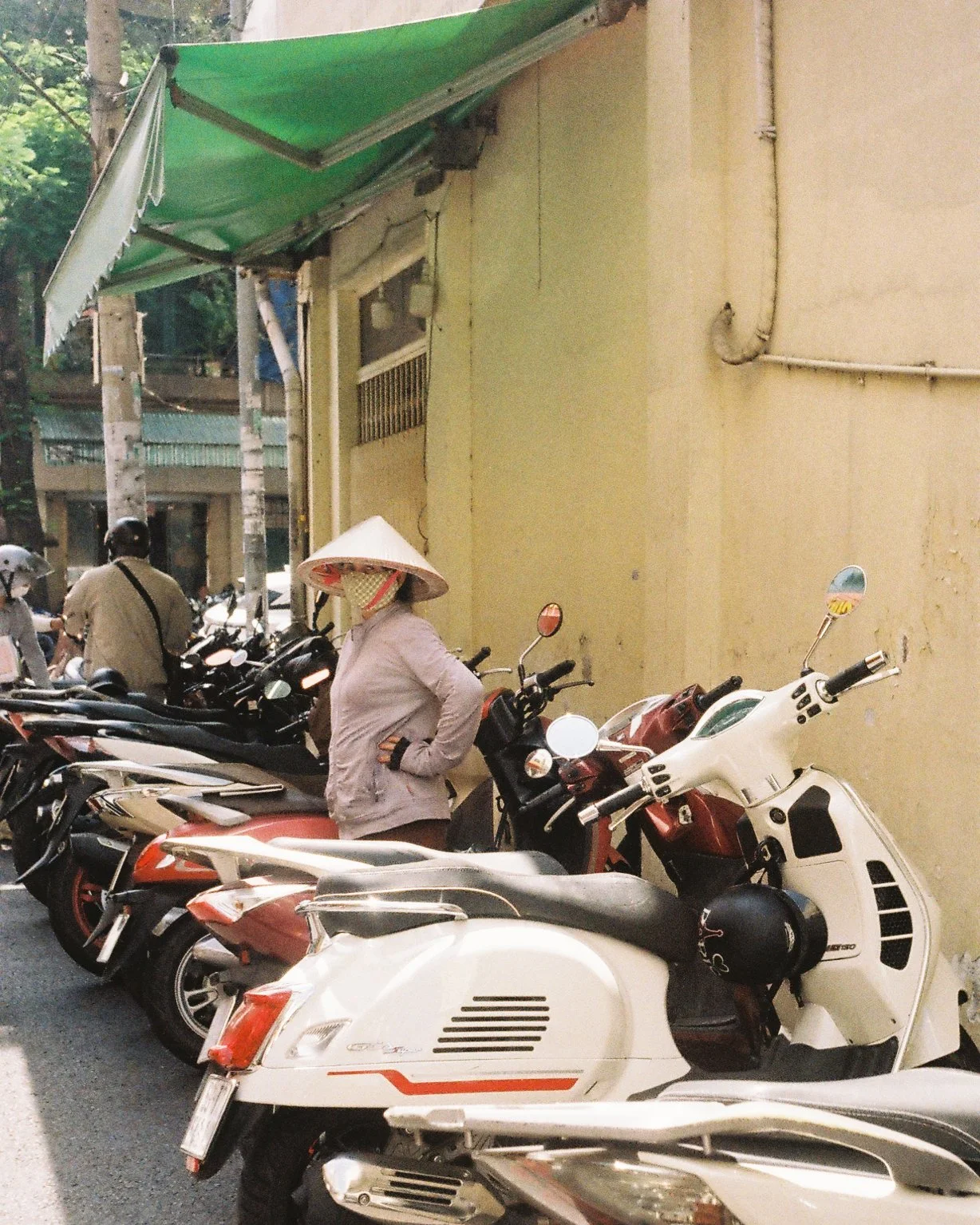
Scooters resting between journeys
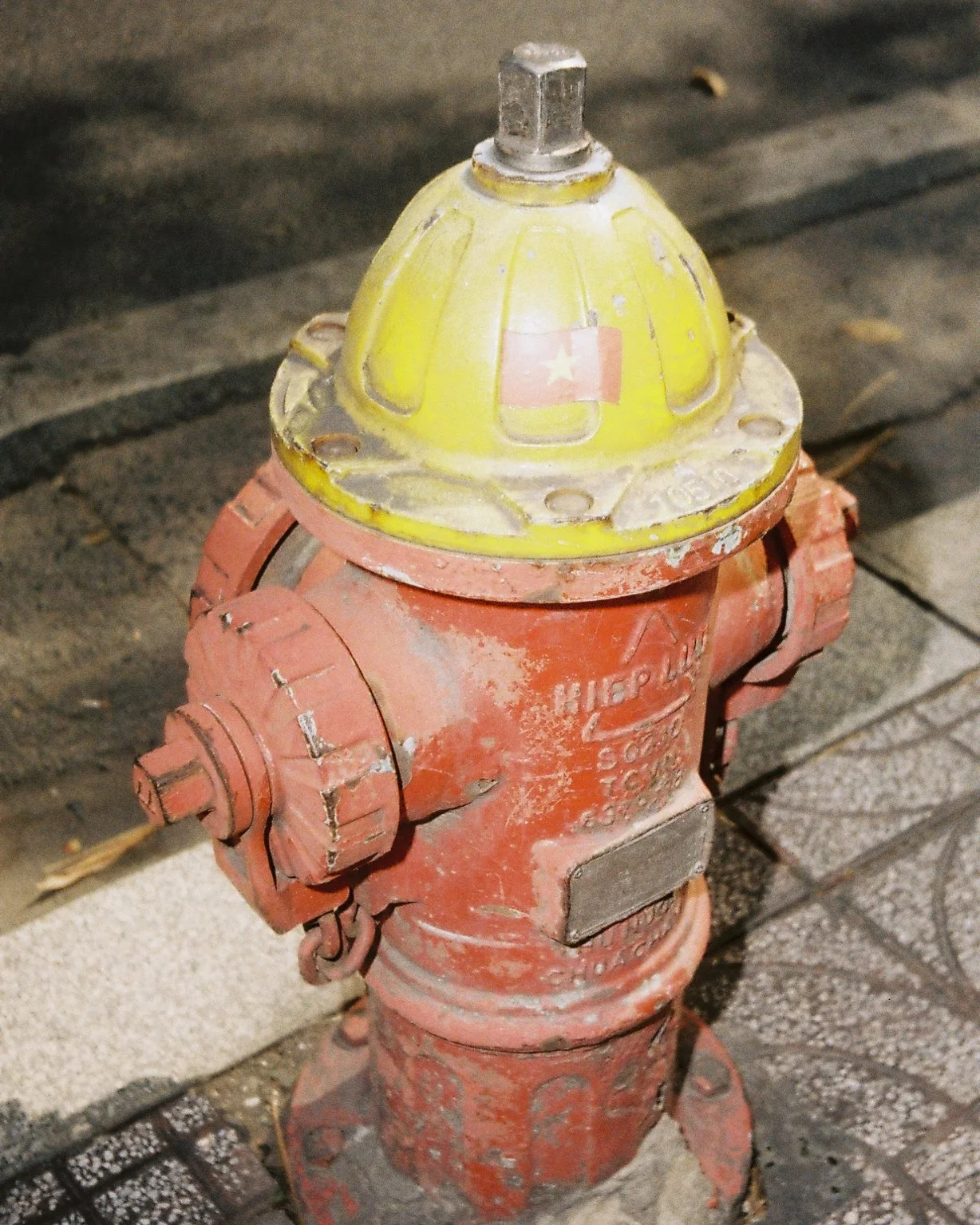
Painted fire hydrants on the street
Back in Melbourne, working between Australia and Vietnam has shaped his visual language. His stories are informed by movement, contrast and connection. He sees himself as a bridge between cultures, people and places. Someone who documents not to claim belonging, but to explore it.
For second-generation migrants, Tyron’s story offers something vital: permission. To be curious. To feel conflicted. To arrive late to your heritage and still call it meaningful. Homecoming, he’s learned, isn’t always about return. Sometimes it’s about introduction.
And sometimes, it’s about realising your hands already know the way.