My Mother’s Tongue Is An Heirloom

Numa’s beloved Ammu, at the heart of her story.
For writer Numa Sarker, a bowl of panta bhat was never just a family meal. In this personal essay, she explores how a humble dish became an heirloom, carrying the language, history and resilience of generations before her.
In 2021, MasterChef hosted a glowing cohort of up-and-coming chefs and food hobbyists, spotlighting some of our best talent. In a surprising turn of events, amongst all the jus and vinaigrettes and glazes, my family recognised something close to home that bridged the jargon: panta bhat. Bengali-Australian cook Kishwar Chowdhury attended the Grand Finale of MasterChef with a humble national dish: smoked rice water.
Ammu, Abbu and I share glances. The delight is infectious. Late Jock Zonfrillo calls the dish “unbelievable” and “cooked to perfection,” while Melissa Leong points emphatically at her plate: “This is powerful food.” We don’t know whether to laugh or cry: a peasant dish, made cheaply and often from leftovers, has made it to the grand finale and left a bold impression. It is a moment where histories collide, and certainly the time for some panta bhat.
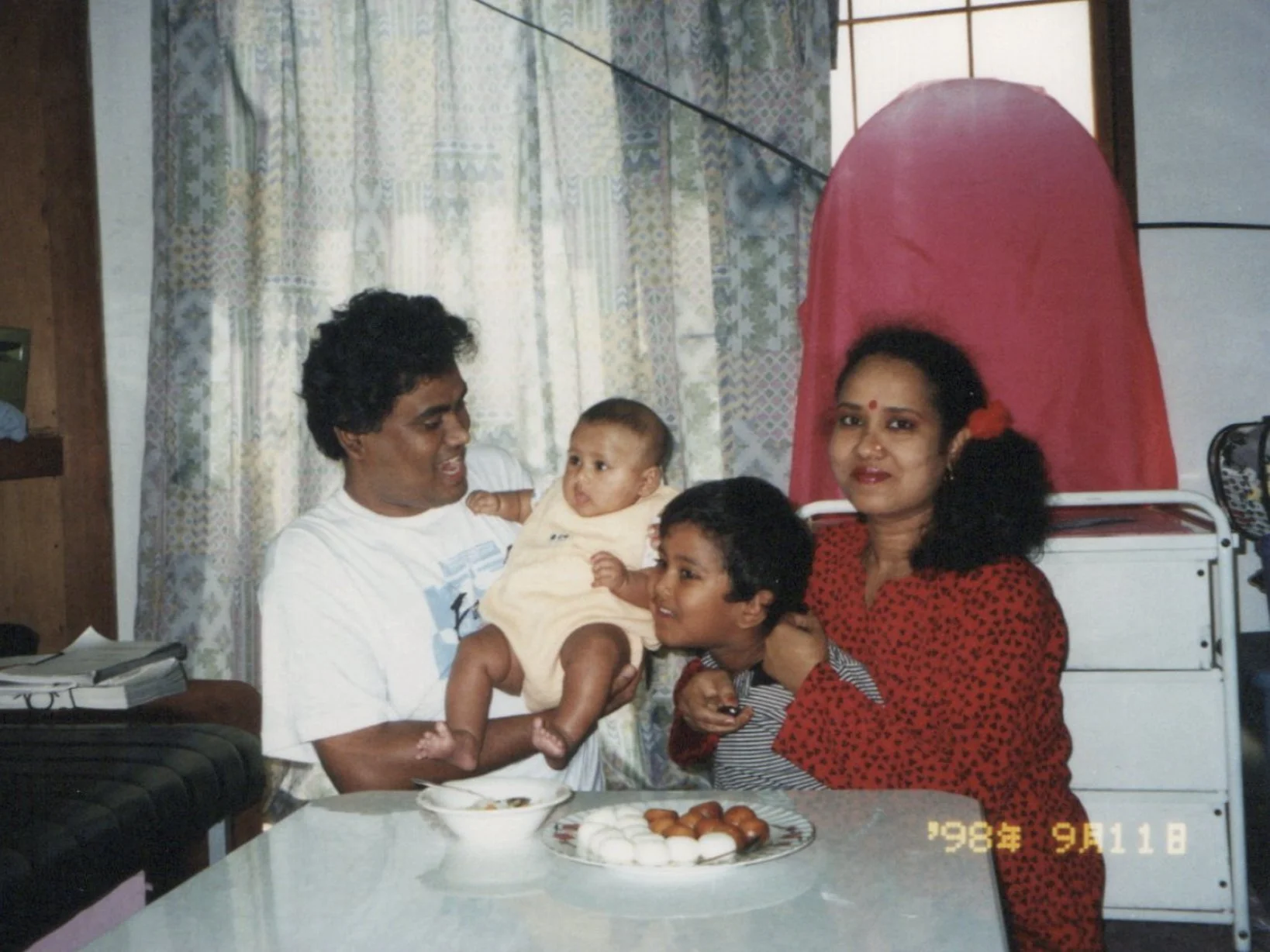
No joyful day is complete without Bengali sweets.
Panta bhat is a rice-based dish, typically prepared overnight. Associated with graam Bangla – rural Bangladesh – it sustained rural farming communities who typically cooked rice once daily, preserving leftover rice in water for a meal the following day.
Combined with readily available ingredients like onion and chilli, it became an ingenious way to nourish families in the absence of fridges, naturally fermenting overnight and cooling the bodies of farmers and labourers who toiled in humid climates.
Growing up, panta bhat was simply what Ammu made. It wasn’t until much later that I understood the history sitting in that bowl. The dish has survived many lives – one of its most significant during the Bangladesh Liberation War, when war and famine swept across what was then East Pakistan.
The land provided protection, sustenance and the means to endure through its bounty, and humble food like panta bhat became a symbol of endurance.
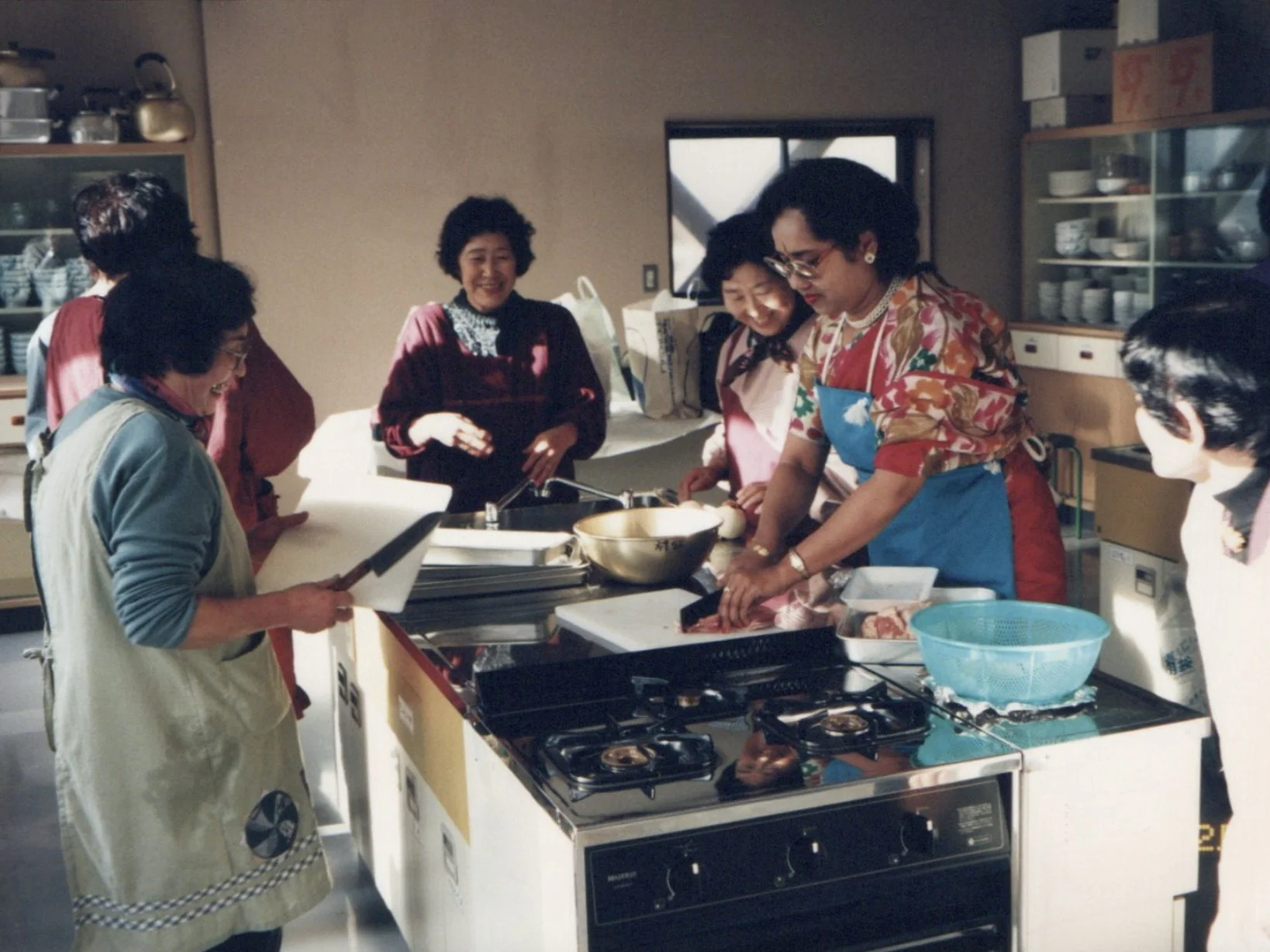
Ammu sharing her cooking while we lived in Japan.
As we look on in wonder, Jock offers the first verdict with a serious tone. “Now, you better believe that that kind of food belongs in this kitchen.” He breaks the tension with a smile, lifting his scorecard: 10 out of 10.
Watching Kishwar serve panta bhat made me wonder why it stirred something so deep within us. The answer reaches far beyond food.
One familiar tune I cherished as a child seemed to me like a sweet ditty: “Amar Bhaiyer Rokte Rangano Ekushey February, Ami Ki Bhulite Pari?” (Can I forget the 21st of February, coloured by my brothers’ blood?). Though the Ekusher Gaan (Song of the Twenty-First) was one that my elementary Bangla didn’t comprehend, I grew to understand its place in my nation’s history. The song honours the martyrs who took to the streets on the 21st of February 1952 to defend their language and demand the right to self-determination. At a time when Bangla was being stifled, their fight marked a defining moment in the Bengali Language Movement and helped pave the way for the birth of Bangladesh.
Today, the song lives on as part of that inheritance. Now immortalised through International Mother Language Day, the Ekusher Gaan can still be heard at the Shaheed Minar (Martyrs’ Monument), where Bengalis gather each year in a barefoot march to remember those who fought for their mother tongue.
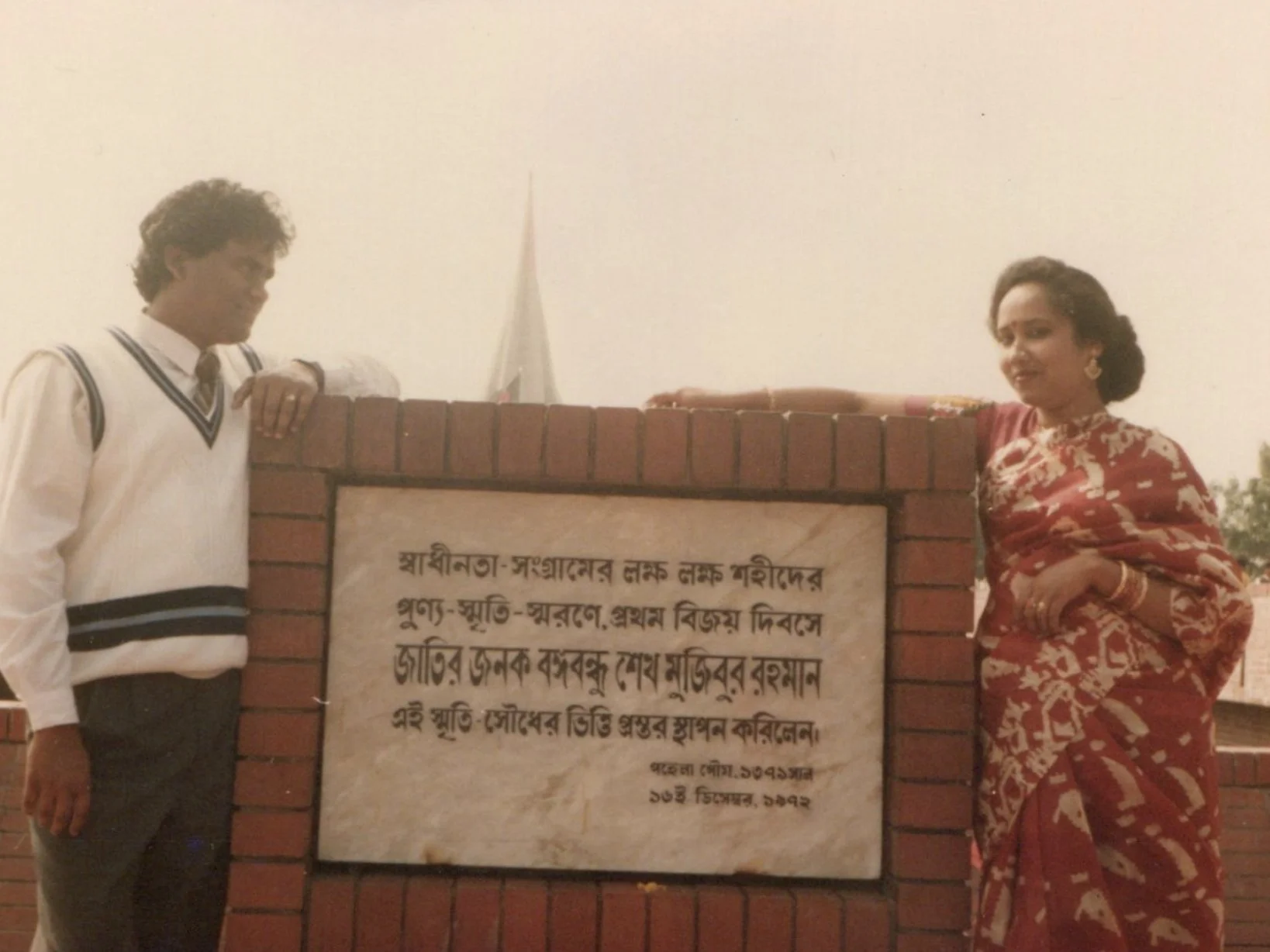
Ammu and Abbu at Jatiyo Smriti Soudho, the National Martyrs’ Memorial in Savar, Bangladesh.
As I’ve grown older, I’ve realised the song and the food on our table were carrying versions of the same inheritance. As the only nation whose independence is fundamentally rooted in the right to speak and preserve our mother tongue, our people know that language is sacred.
Through that struggle, the Bengali people sustained themselves on the food of their land – humble, nourishing dishes like panta bhat. Once the war was won, its memory lived on through Pohela Boishakh (Bengali New Year) and in kitchens around the world, where survivors like my parents continue to make it – for its flavour and for the literal taste of freedom.
Back in the MasterChef kitchen, the camera zooms to Mel, who flashes a vibrant, red-lipped beam and reveals her 10 in quick succession, zigzagging her scorecard through the air in brimful joy.
When Ammu makes panta bhat now, she scrunches roughly diced onions through the rice as the water patters. She reaches for begun bhorta, a mashed eggplant dish of charred eggplant, smoked chillies, onions, coriander and salt, smoothed together with a helping of mustard oil.
I no longer see leftovers. I see inheritance on a plate.
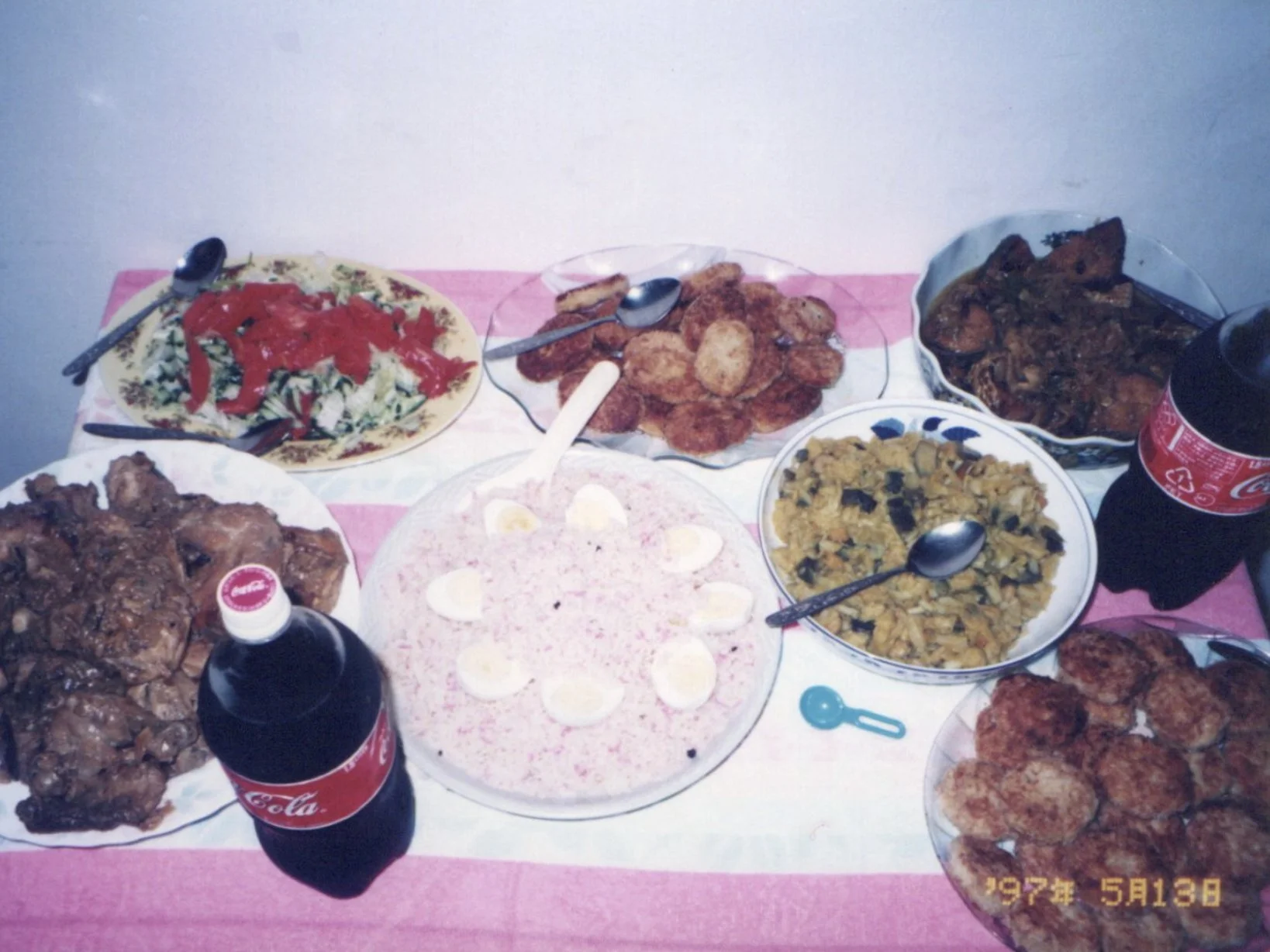
Cultures colliding around the table.
If there’s any special gift Bengalis have, it’s the talent to innovate from bare-bones foundations – a dish, a language, a movement. I ask to try some. It’s complex, layered and distinctive, much like us.
That night, I finally understood something. Our language is an heirloom.
We have our words, our sounds and music, and our tastes, too.
All the senses combine when a tongue tastes something. Hands squeeze to lift it to the mouth. The nose takes in the char and smoke, recognising something that’s burned, creating a new dimension.
On the table sits a modest bowl: grains floating in water, a ribbon of oil on the surface, small bowls of dark paste alongside – aloo bhorta (mashed potatoes), achar (pickle), maybe a piece of fish if the day has been kind. We don’t think much of what we’re seeing – no restaurant main or fine dining experience – but what we taste is grounded in something we deeply know: a rebellious wisdom, born from resistance, inherited and waiting to be passed on.
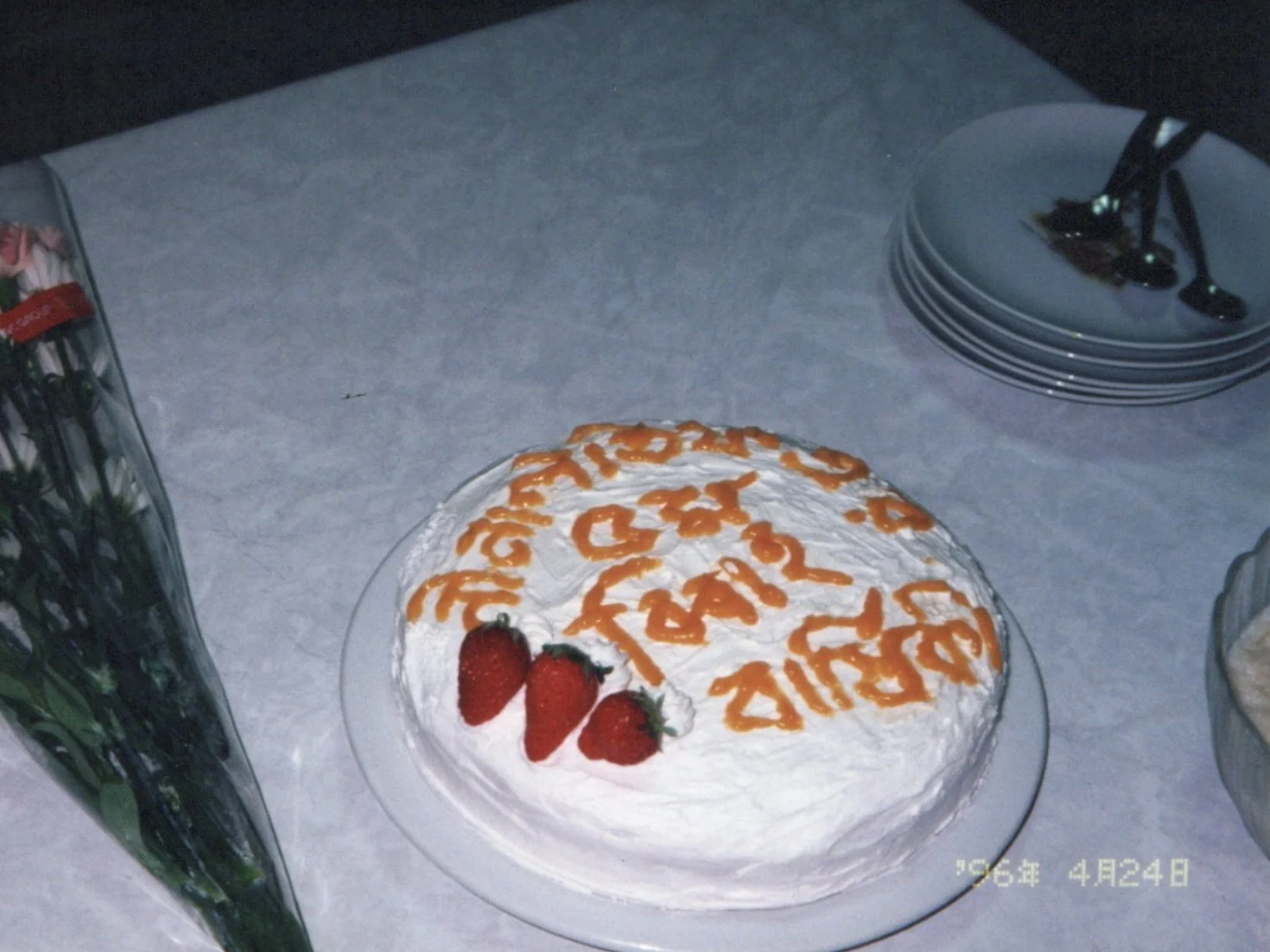
Celebrating with a birthday cake written in Bangla.
The judges announce Kishwar has scored a perfect 10 from each judge, giving her a maximum score of 30. In making MasterChef history, she’s sparked joy for Bengalis everywhere, seeing the language of their food embraced on national television.
I used to find panta bhat strange and particular, but from that moment on, it became a beautiful union of my culture and my language, to be tasted, preserved and earned.
Its earthiness calls me home – to the roots of my land and to those who helped shape it. And so, alongside the curries I’m learning to cook for my future family (in sha Allah, God willing), there lives panta bhat, offering the beauty of my desh through its smoke, rice and water.