My Disagreeability Is My Power

Gospel of a proudly inconvenient creative.
For creative Parth Rahatekar, being difficult isn’t necessarily a flaw – sometimes, it’s the whole point. In this spirited defence of disagreeability, they consider what can happen when we push back, question what’s expected and make room for perspectives shaped by culture, migration and lived experience.
Here’s a jump scare: I disagree with you. Wholeheartedly. No, there is no whitewashed picket fence for me to sit on here. I don’t care what you’re trying to get across. I disagree with you. In fact, I capital-H Hate™ whatever you’ve presented to me. All of it, in its flattened, failproof, risk-averse, frankly boring, mediocre entirety. Got it? Good.
Does that make you feel like a fool? It shouldn’t. I know you’re not attached to your work like that; you’re just not used to being told it kinda sucks.
Let me say something radical: I’m a very moody creative, and I’m proud of it. I throw a fit at feedback sometimes. I push my clients to do things they’d rather avoid. I disagree with editors. I’ve lost commissions because of it. And I think more of us should do it. Not to stir the pot, but to be true to our experience and knowledge. Weren’t you hired to do a job? Now it’s time to do it well!

The standard Indian hand gesture to ask “What are you even doing?”
This piece of advice came to me from my mentor, Kimberly Anthoney. To be fully candid and kind of dramatic, it saved my life. Okay, maybe it didn’t. But it did turn the workplace from a boardroom into a playground. Our ideas came to the table as spectral Play-Doh instead of a stuck-up pinstripe suit. We were ready to defend the fort if we believed in them or gleefully morph them into something suddenly alien to us – still some kind of magical.
What I mean is that disagreeing matters. It generates knowledge and resilience. It pushes us beyond the limits of what any one of us knows. Not to irk any improv fans, I love a ‘yes, and’ as much as all of you, but have you ever discovered the power of ‘no…because’?
Ask yourself: Is your expectation of constant collegial behaviour creating yesmanship? Don’t you want to learn more? Won’t you feel more confident if you field criticism while your outputs are still taking shape?
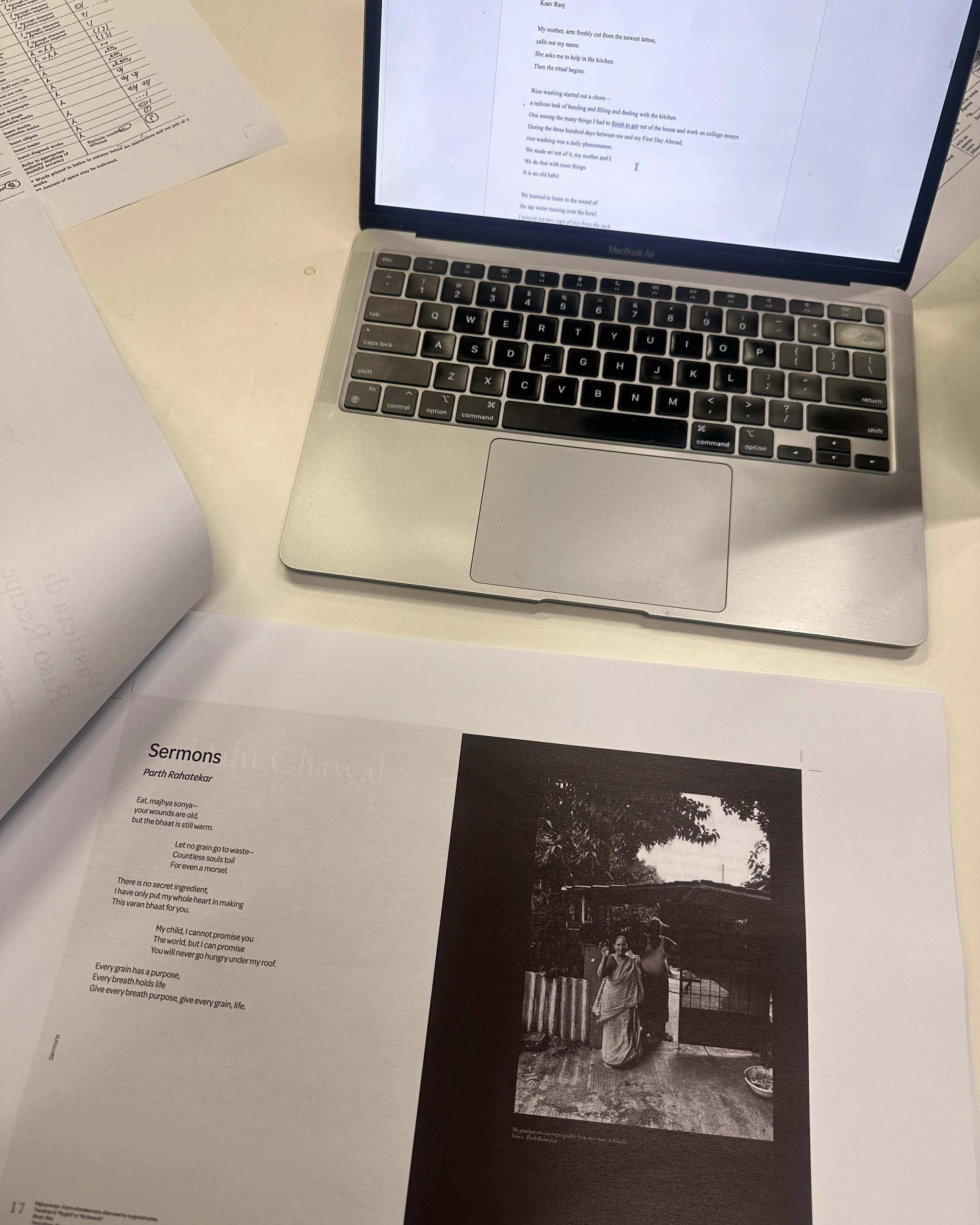
A poem about my grandparents’ loving lessons to me.
Now, I’m not advocating becoming entirely ungovernable for the sake of it. Nor do I think disagreement has to be hostile or nasty. It doesn’t have to be dismissed either. I’m just hoping we’re not allergic to nuance. There are many ways to arrive at excellence. But in Australia, I’ve experienced attempts to expand the conversation being read as confrontation instead.
Dare I say, it doesn’t just show in our creative outputs. The same threads run through society, race and culture here.
Perhaps the question isn’t why we’re so averse to criticism, but something far deeper: Who controls what is said, and who is allowed to question it or disagree with it? Who really gets a fair go?

Always a giggle up my sleeve.
Let’s talk about it. In a country where visas can be precarious and the cost of immigration extractive, only a select few make it to the tables where decisions affect people who experience life like them. This is by design.
When we make it to these rooms and speak, we don’t represent. We know. So when we disagree, we speak that knowledge into change. It should catalyse you, not scare you – least of all discourage you. You might end up somewhere you never thought of because it isn’t your experience. It can create something tangibly better. Not in the dogwhistled realm of ‘balanced’. Nor in the comfortable expanse of ‘good enough’. Better. Delicious. Imagine that!
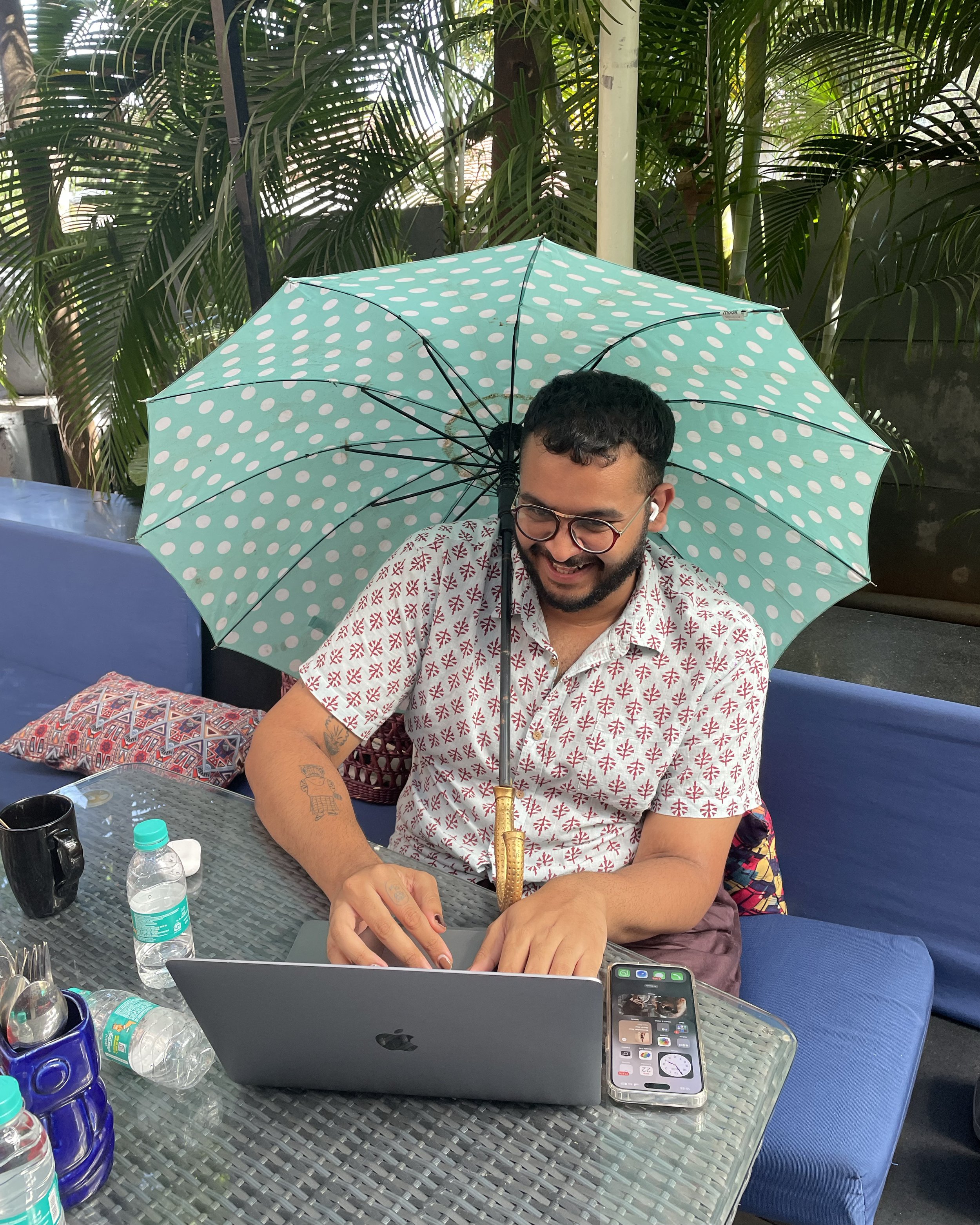
In Goa, drafting a fiery email with a kind of glee only I could have.
Work culture in India can be a particular kind of extractive; disagreeing there was fuelled by my desire for balance and queer ways of thinking. I think similarly about Australia – but its extractiveness is different because my position here is different. And so, disagreeing here is different too.
It feels more significant, and might I add, vital. Like it could change something for more than just me. Perhaps someone can disagree with me to show me otherwise.