Spot The Aussie. Here I Am.
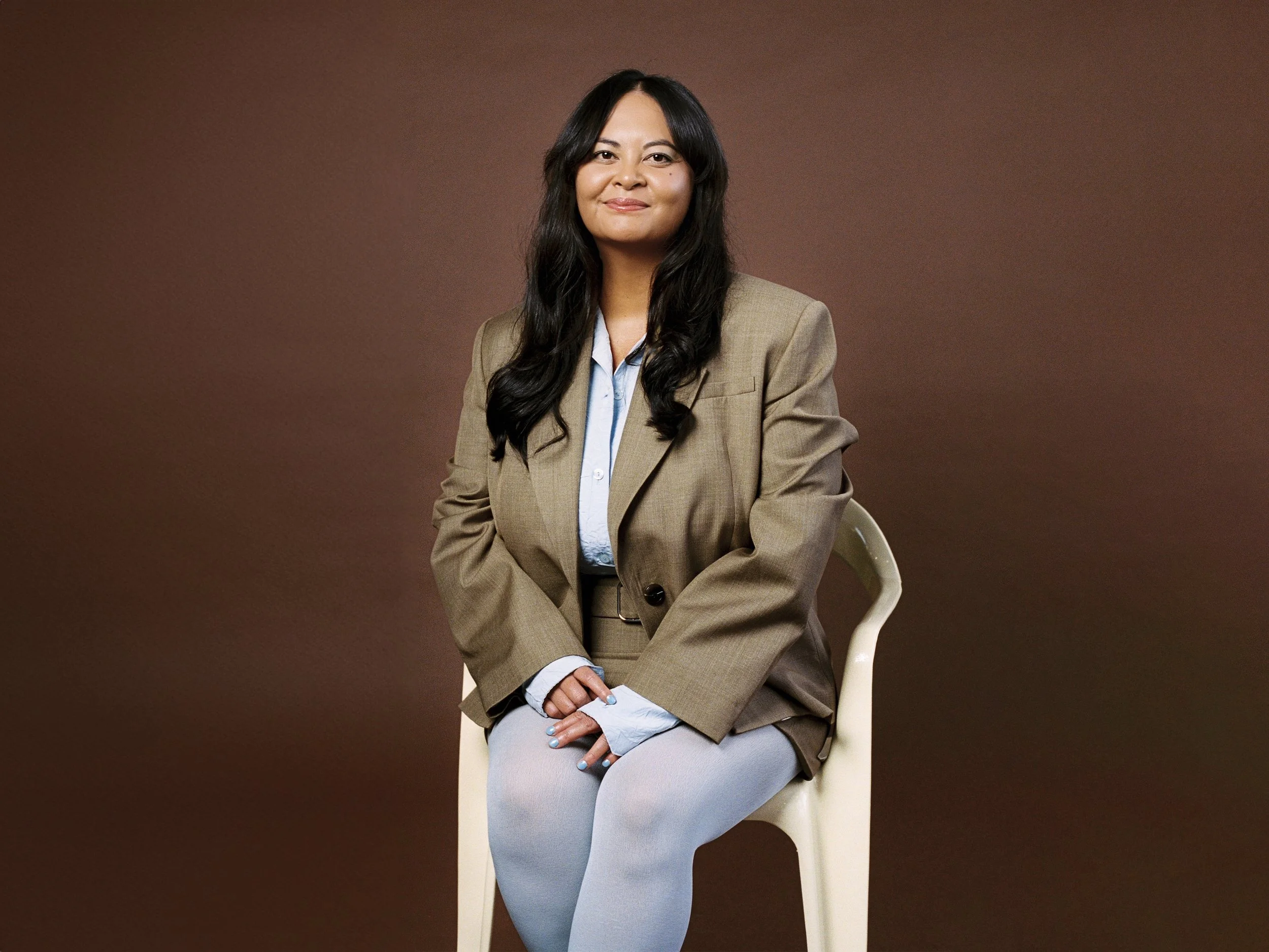
The Aussie in question, Pauline Morrissey.
What exactly does it take to be Australian enough – and who appointed the judges? In this essay, Pauline Morrissey reflects on more than three decades of growing up and building a life in Australia, and the irritating truth that, for some people, even a lifetime of evidence still won’t count.
I grew up obsessed with the Newcastle Knights.
Not casually. Religiously. My Aussie dad, Peter, introduced me to them and, growing up in Port Stephens on the New South Wales coast, not far from Newcastle, they quickly became part of the fabric of my childhood. Although I lost interest somewhere in my late twenties, whenever I need to remember a sequence of numbers, I still fall back on the legendary 2001 premiership team with ridiculous confidence.
Andrew Johns, number seven. Danny Buderus, nine. Adam MacDougall, five. Robbie O’Davis, one.
This was the Australia I grew up in. Rugby league on television. Hot chips at the beach. Happy Harold at school. A Macca’s birthday party when my parents decided to spoil me. Netball every Saturday morning.
Spot the Aussie.
She was there on family road trips north from New South Wales to Queensland, sitting in the back seat beside my little sister Jasmine, tearing through Goosebumps books, probably eating a pink Fizzer and counting the minutes until it was Dreamworld time – with Sea World and Wet’n’Wild thrown in too, if we were extra lucky. We never bought food inside, of course. Our mum, Patricia, would have packed us a Filipino lunch.
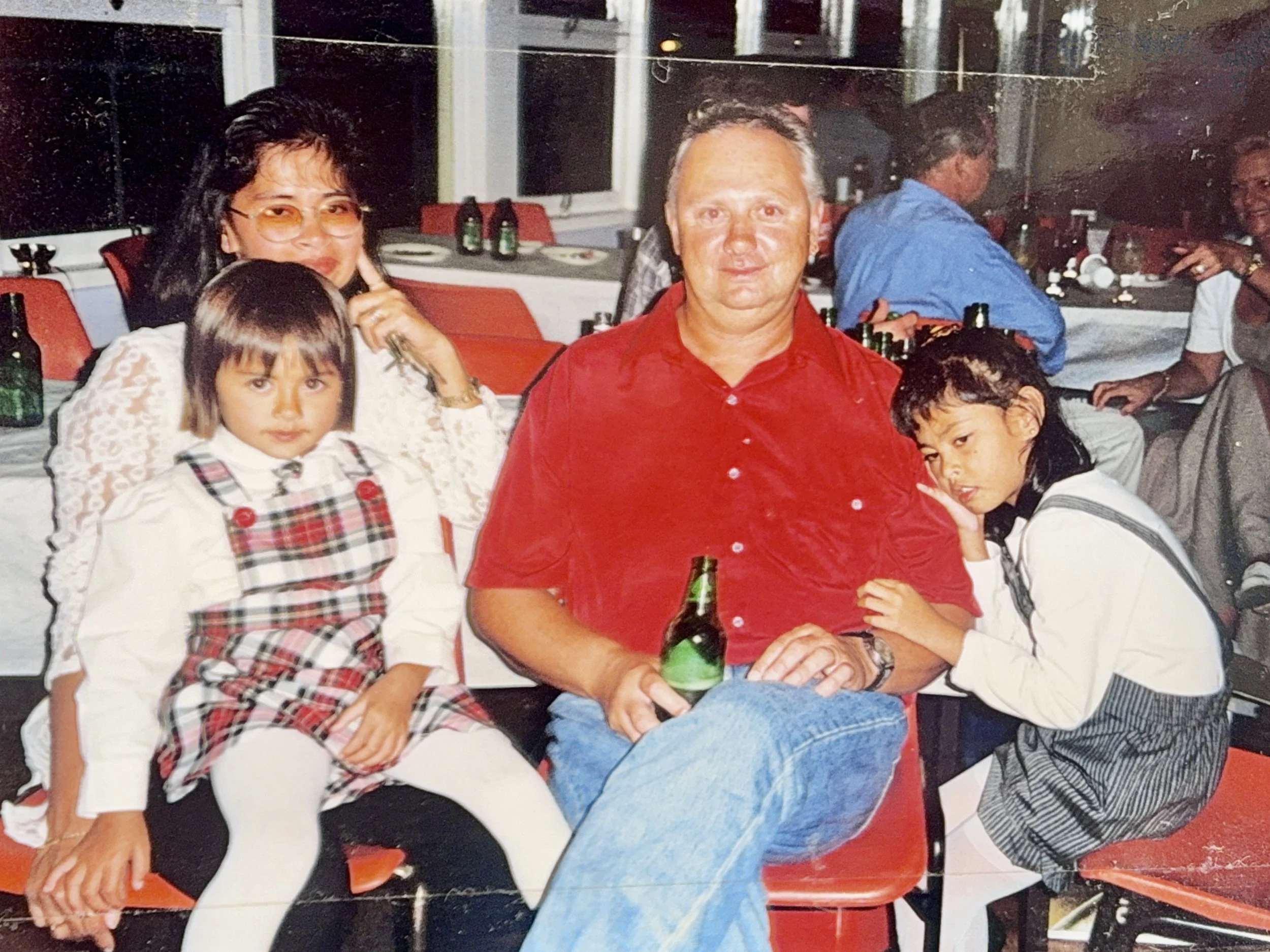
A family moment at our local bowling club.
I started thinking about all of this after coming across a Reddit post about racism in Australia. It had been prompted by comments left beneath a news story about Australians missing in the recent devastating flooding tragedy in Nepal. Looking at their faces, strangers had apparently decided some of them weren’t really Australian.
Amazing what people think they can determine from a photo.
Among the responses was someone writing about a missing friend who had been born here, gone to school here, attended an Australian university, spoke with an Australian accent and participated in his community. The question they asked stayed with me: what else could he have done to be more Australian?
It made me think about my own life. Not because I believe any of us should have to assemble evidence of our Australianness like we’re applying for some imaginary cultural passport. But because, even with more than three decades of it, I know that to the wrong crowd, it still won’t be enough.
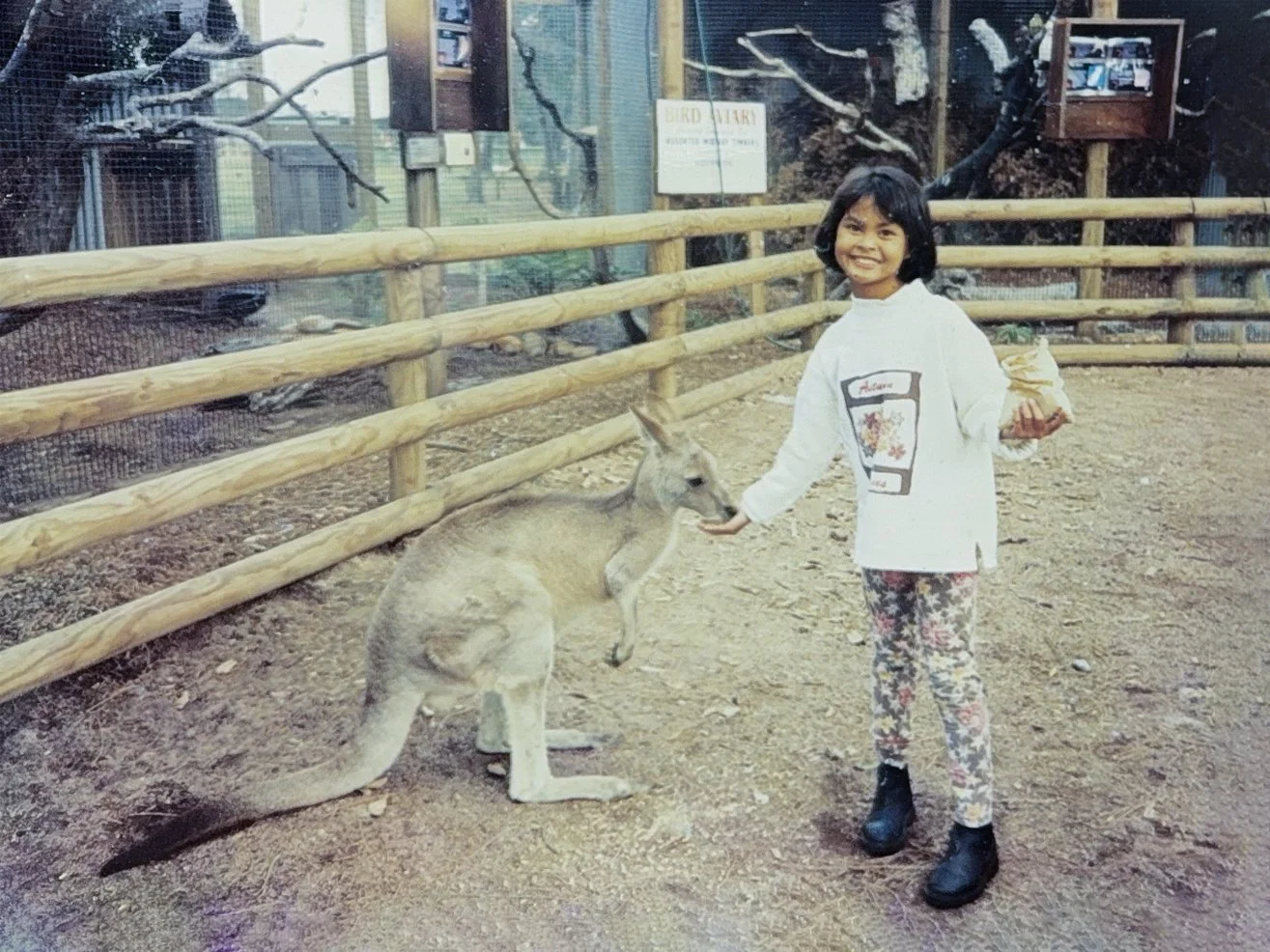
Feeding a kangaroo at Oakvale Farm.
I arrived in Australia from the Philippines when I was seven years old and started Year 2 without speaking English. So perhaps, technically, there was a point when I was becoming Australian. Learning the language and humour. Learning what everyone ate at recess. Learning what made my friends’ households different from mine through countless sleepovers.
Children are very good at assimilation. They understand instinctively that belonging often means observing first, then copying quickly. Before long, none of it felt copied. It was just my life.
I knew never to walk barefoot on asphalt roads during summer. That bindis hurt. That magpies sometimes required alternate routes to school. That mufti day meant bringing my A-game to my outfit. That Christmas lunch could happen in thirty-degree heat, and being a fast prawn peeler carried serious social currency.
As an adult who travels for extended periods, I start missing two foods when I’m overseas for too long: Filipino sinigang and an Aussie sausage roll. I can tell you exactly where to find the best version of both – my mum’s kitchen for the sinigang and Red Ned’s in Nelson Bay for the latter.
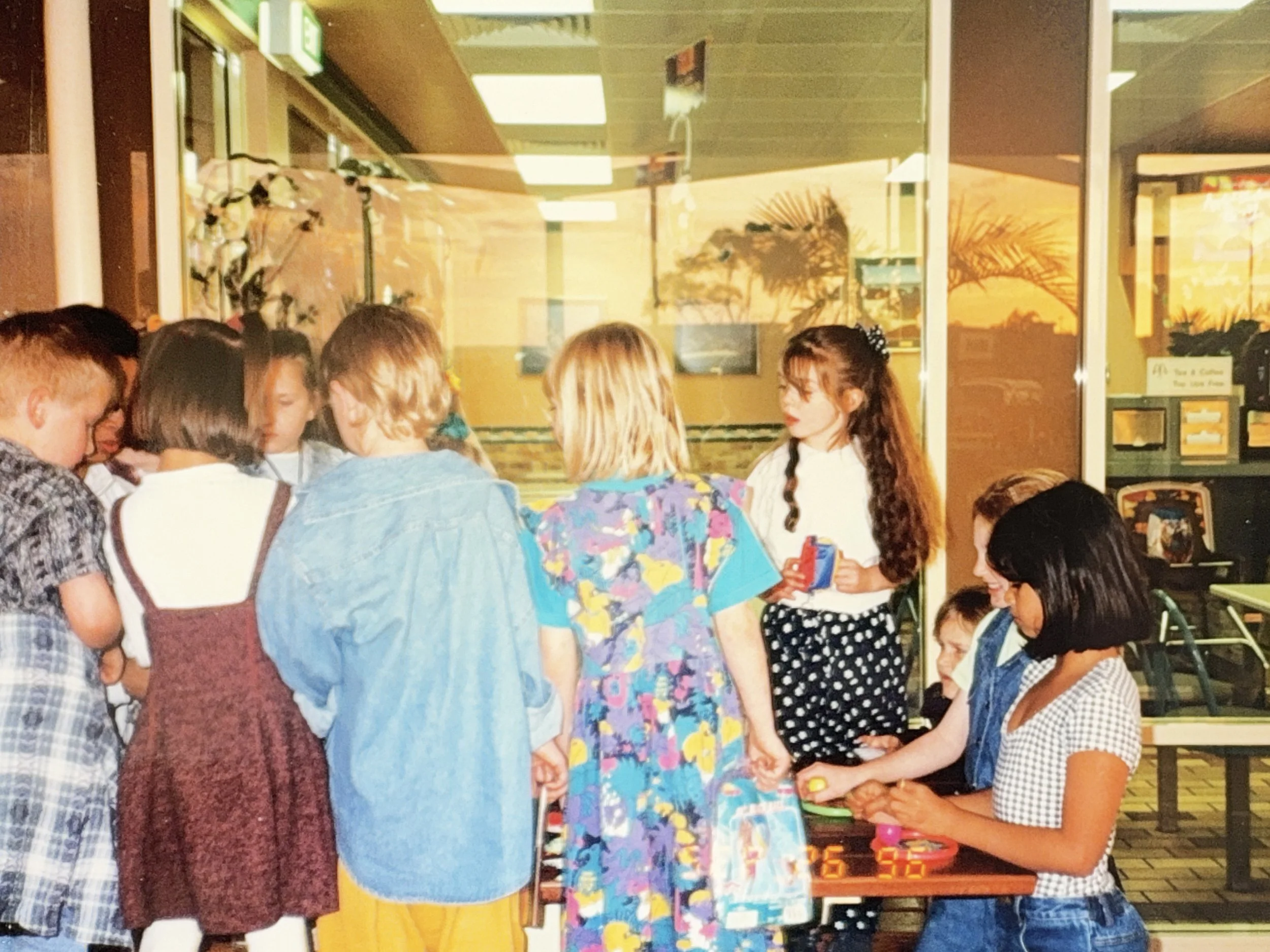
Rocking an Asian bob at a Macca’s birthday party.
There has never been a great battle inside me between the Filipino and the Australian, despite how often people seem to want migrant identity to work that way. One does not cancel the other out. I don’t eat sinigang and become slightly less Australian. I don’t eat a sausage roll and become slightly less Filipino. I’m perfectly capable of loving and craving both.
I grew up going to Filipino parties one weekend and an Australian backyard barbecue the next. Heck, sometimes both on the same weekend. At both, I’d do the ol’ eat-and-run, rushing through family obligations so I could skedaddle off to hang out with my friends. Back then, I wasn’t thinking about identity. I wasn’t consciously moving between two cultures. They were just family things standing between me and whatever my friends were doing.
I can return to the Philippines and feel something ancestral and familiar tug at me, then fly back into Sydney and feel the equally familiar comfort of hearing the Australian accent around me. Both feelings are real. Both places have made me.
For a long time, though, I probably performed the Australian part more loudly. Not consciously. I was simply growing up. Like plenty of brown migrant kids, I became very good at understanding the country outside our front door while moving between a slightly different set of rules inside it.
At school I learnt one kind of Australia. At home, another geography existed – my Nanay (mum), Filipino food, relatives on long-distance phone calls, different ideas about family and obligation, and words I understood even when I didn’t always use them.
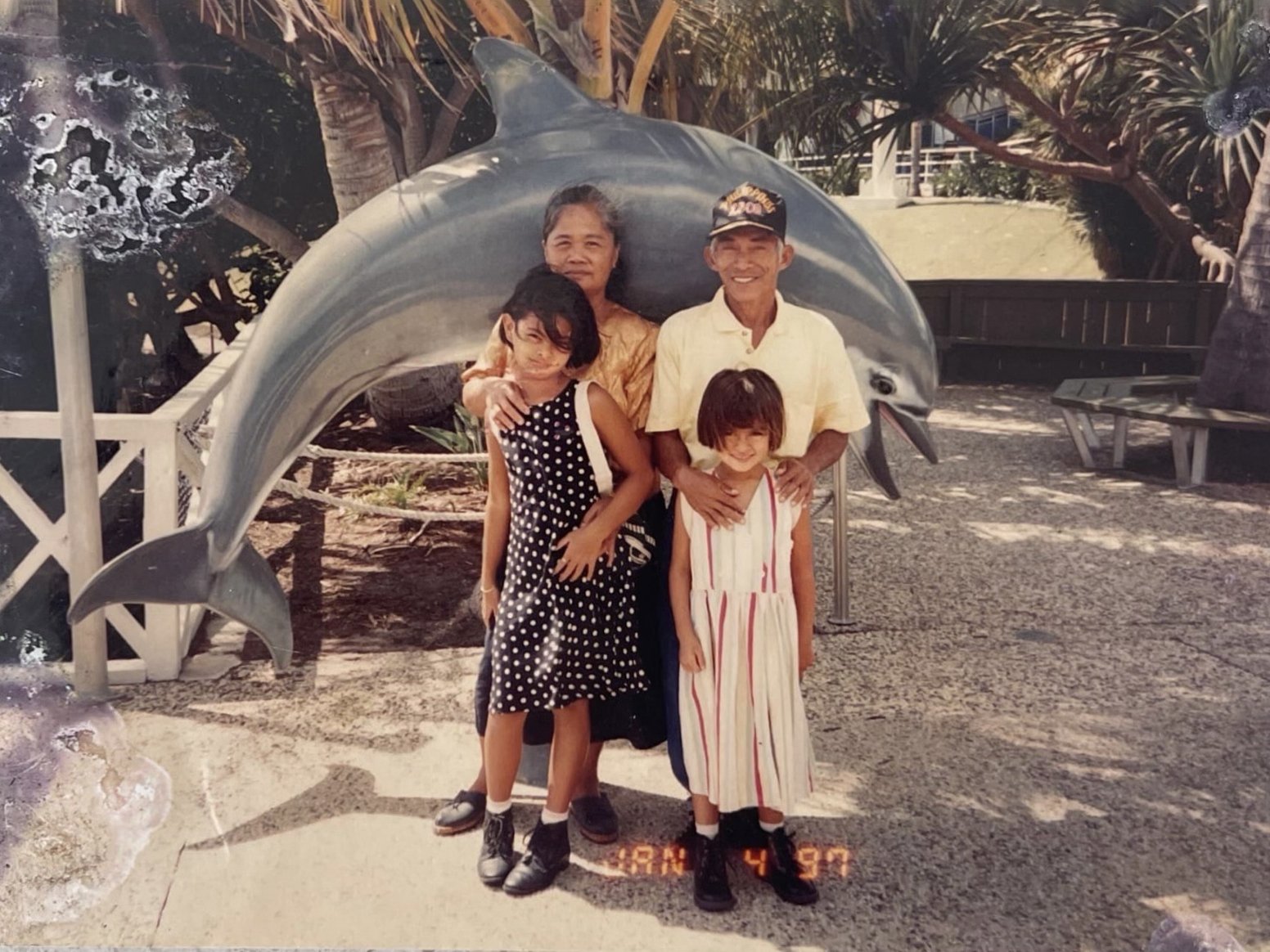
Visiting Sea World while our Lola (Grandma) and Lolo (Grandpa) were visiting Australia.
As I got older, I began wondering more about what we had left behind in the Philippines, so I travelled back more often. Eventually, in my mid-thirties, I reclaimed my Filipino citizenship. I wanted to know more about our history, our people and the things I hadn’t realised I had lost until adulthood gave me enough distance to notice them.
I built MADE IN KIN partly because I wanted to make more room for people whose Australianness looks something like mine – formed here, but stretching elsewhere too.
Strangely, the more secure I’ve become in my Australianness, the more confidently I’ve reached back towards the Philippines. Maybe that’s not the kind of assimilation some people prefer – perhaps their ideal migrant is one who arrives, integrates neatly and stops mentioning where they came from. Someone grateful enough to belong here that they become indistinguishable from everyone else. Very convenient.
Except, of course, some of us never become indistinguishable. There is always the surname. The parent with an accent. The face. The skin tone. And suddenly the whole strange test begins again.
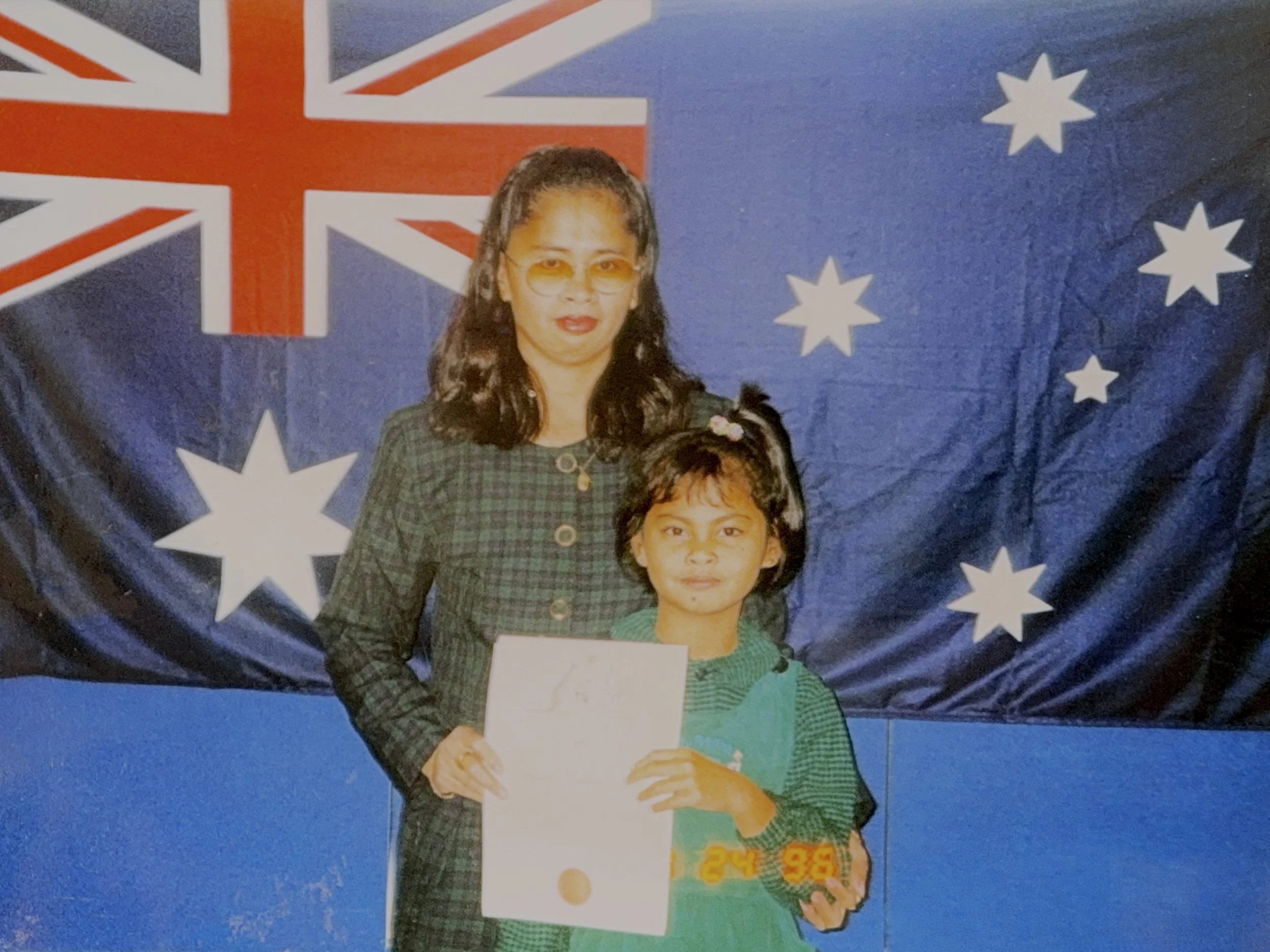
With Mum at our Australian citizenship ceremony.
Earlier this year, the topic of race ended two close friendships of mine. I was away for a weekend with my husband, Kieran, and another couple – an Australian man and a British woman, both of them white. We had met them years earlier while living together in an overcrowded London share house in our early twenties.
Somehow, during that weekend, a conversation turned to race. The Australian friend used the word “yellow” to describe Asian people and insisted there was nothing wrong with it. I told him there definitely was. What followed was one of those arguments where the subject seems small at first – a word, a description, whether someone should be offended – until suddenly you realise you are arguing about something much larger.
At some point, I put it to them this way. Imagine Australia became a place where people started deciding who was Australian enough to stay. Between me and my British friend, who do you think they would question first? Me, a brown person who arrived here at seven years old, who grew up here, went to school here, has an unmistakably Australian accent and has spent more than three decades living an Australian life. Or my white British friend, who had been living in Australia for less than a decade and still spoke with a British accent?
Though neither of them answered, we all knew the answer. Me.
And somewhere during that conversation, deep down, I knew the friendship was over.
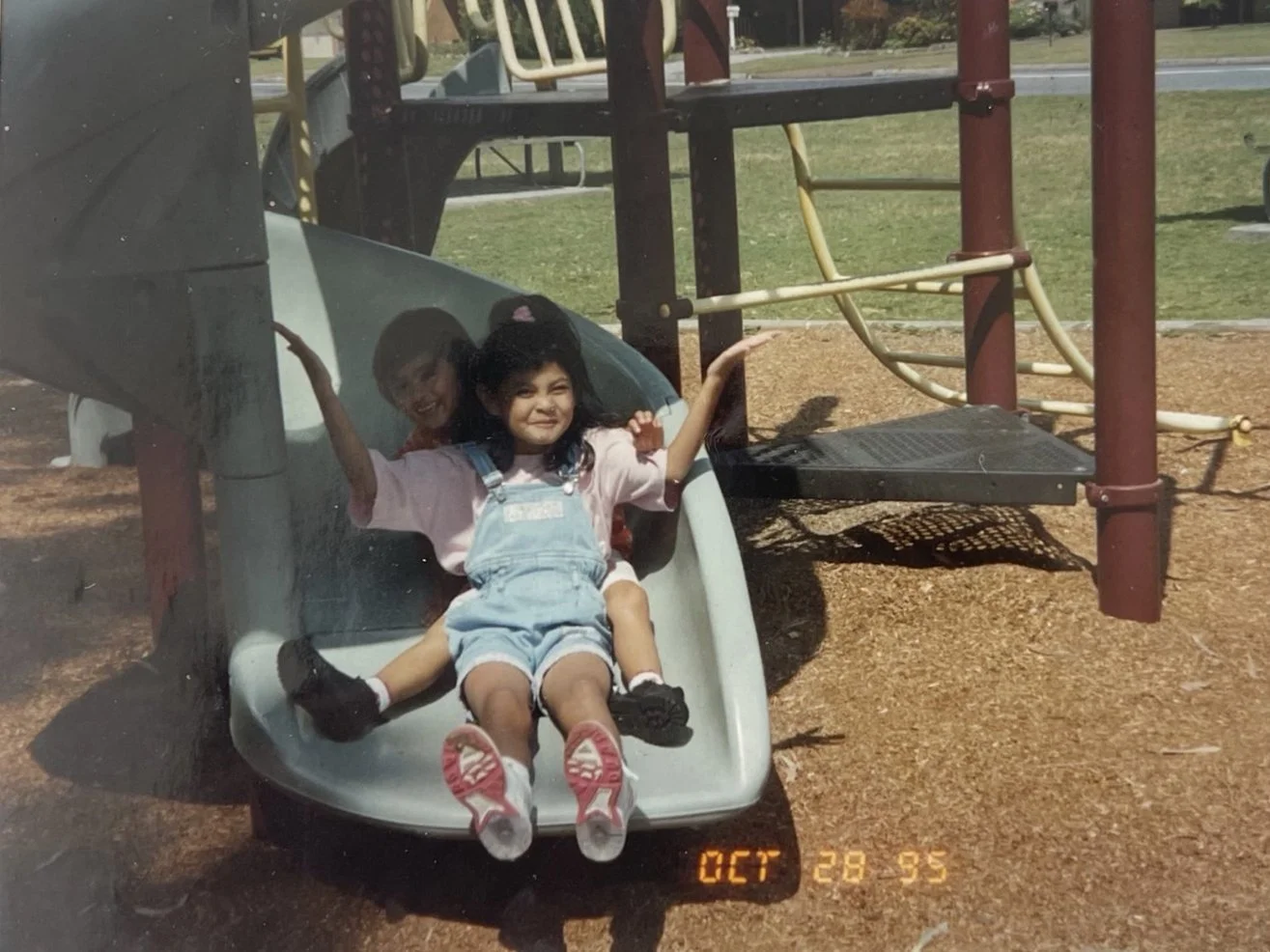
At a local playground with my little sister.
It clarified something I had probably understood for a long time but had never articulated quite so plainly. The argument about who has “assimilated” is often presented as though there is an objective test. Learn the language. Participate. Adopt the culture. Become part of the community. Tick, tick, tick, tick. And still, people like me can be read as foreign at a glance.
Meanwhile, someone white can arrive from Britain or another part of Europe and, within a few years, move through Australia without their belonging being interrogated in quite the same way. Which suggests the test was never really about assimilation. Sometimes, it is about race.
This feels particularly exhausting in moments when the country becomes anxious about migration and people start talking about who belongs, who assimilates and what Australia is supposedly in danger of becoming. I listen to some of these conversations and wonder what, exactly, successful assimilation is meant to look like. Should I have remained a Newcastle Knights fan? Would another decade of sausage rolls do it? Should I have excused the description “yellow” and filed it away under Australian banter?
How many decades does it take? What exactly counts as evidence? I offer dusty school photos. Old netball uniforms. First jobs. Tax returns. A writing career spent telling stories about Australian homes, towns and people. Australian slang embedded so deeply in my vocabulary that I don’t hear it until someone overseas points it out. Would you like references too?
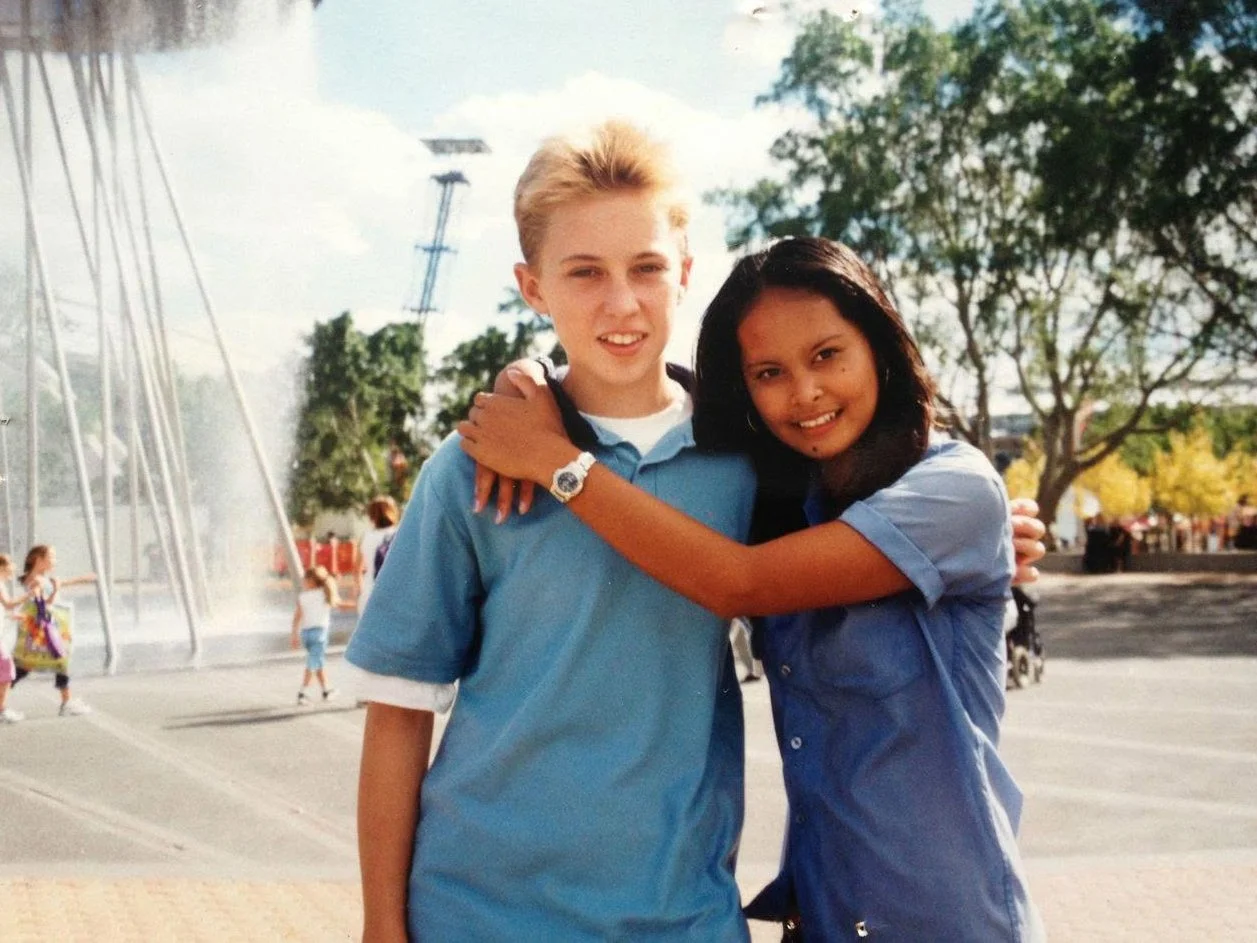
On a school excursion to the Easter Show with my then friend, now husband, Kieran.
And yet, there’s something about offering all this evidence that feels wrong.
Because what happens to the migrant who doesn’t like rugby league? What if they have never heard of Happy Harold? What if they hate sausage rolls? What if they arrived in Australia last Tuesday? What if they speak accented English forever? Surely belonging cannot require passing a cultural pub quiz.
I don’t want to prove I am Australian because I know the 2001 Newcastle Knights team. I want to live in an Australia where knowing them is simply one funny detail of an Australian life. Mine.
The question was never really whether I assimilated successfully enough. The question is why some Australians still think they get to decide when the rest of us count.
Because perhaps the problem isn’t that people like me have failed to become Australian. Perhaps some people are still looking for an Australian and expecting to see only one kind of person.
So, try harder to spot the Aussie. Starting with this one right here.